1890s–1900s, Paris and Vienna
Art Nouveau Posters
Art Nouveau treated the poster and the decorative panel as fine art, wrapping flowing organic lines, flattened pattern, and stylized female figures around advertisements, theater bills, and interiors. Alphonse Mucha's 1894 poster for Sarah Bernhardt made him the style's defining name in Paris; Gustav Klimt carried its decorative instincts into painting in Vienna.
Key works
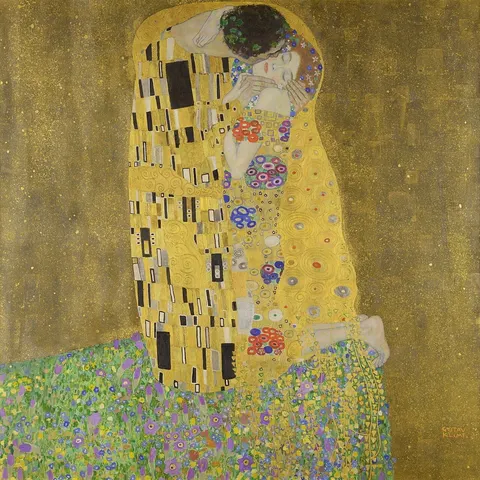

The Kiss
Gustav Klimt, 1908–1909
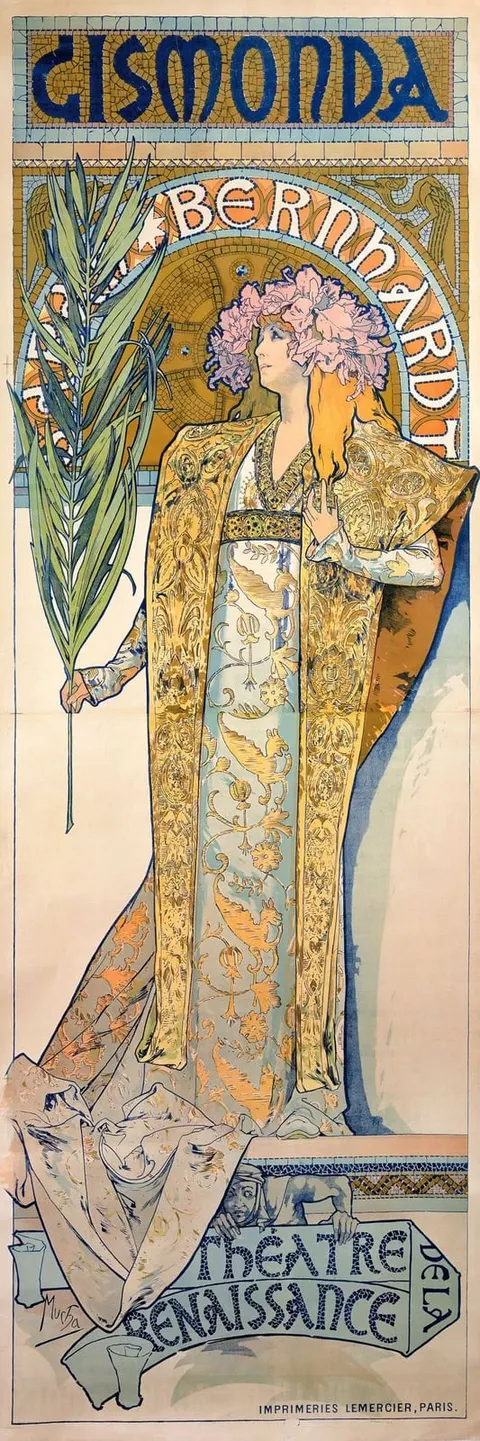

Gismonda
Alphonse Mucha, 1894
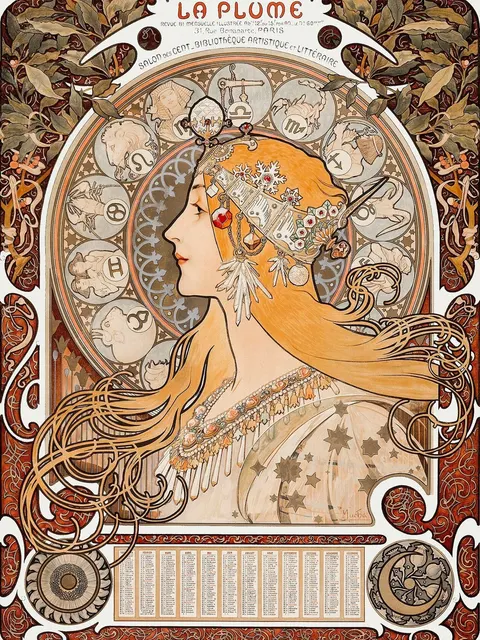

Zodiac
Alphonse Mucha, 1896
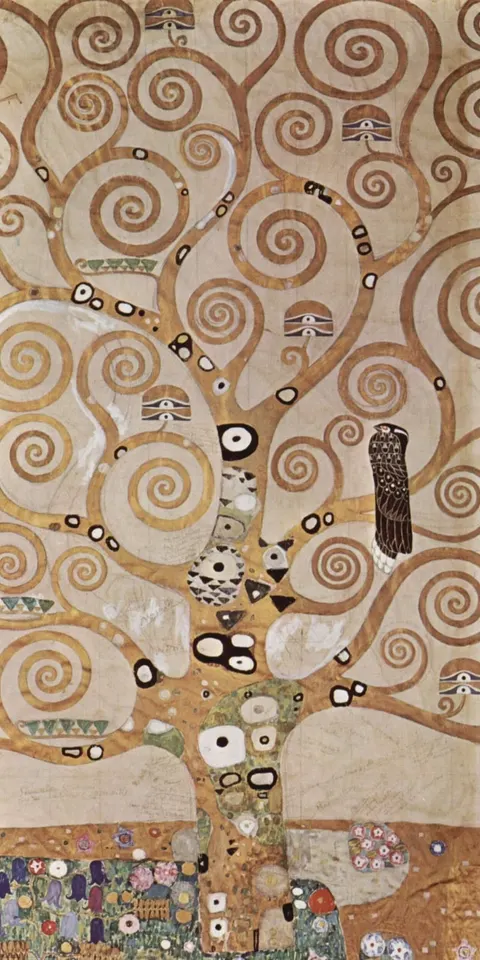

The Tree of Life (Stoclet Frieze)
Gustav Klimt, 1910–1911
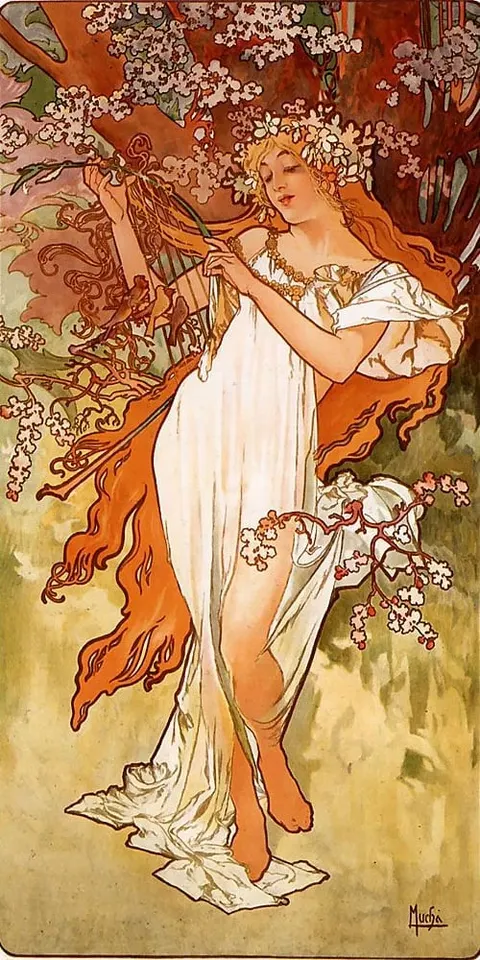

Spring, from The Seasons
Alphonse Mucha, 1896
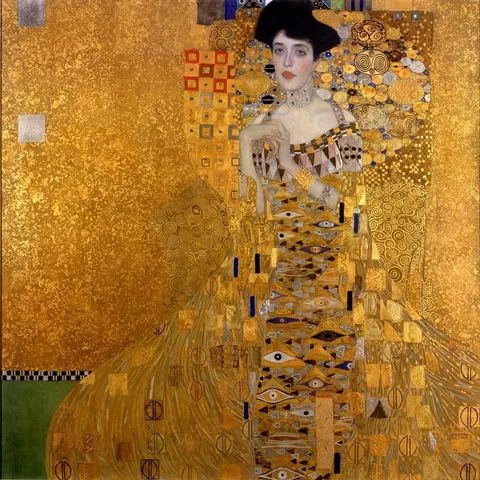

Portrait of Adele Bloch-Bauer I
Gustav Klimt, 1907
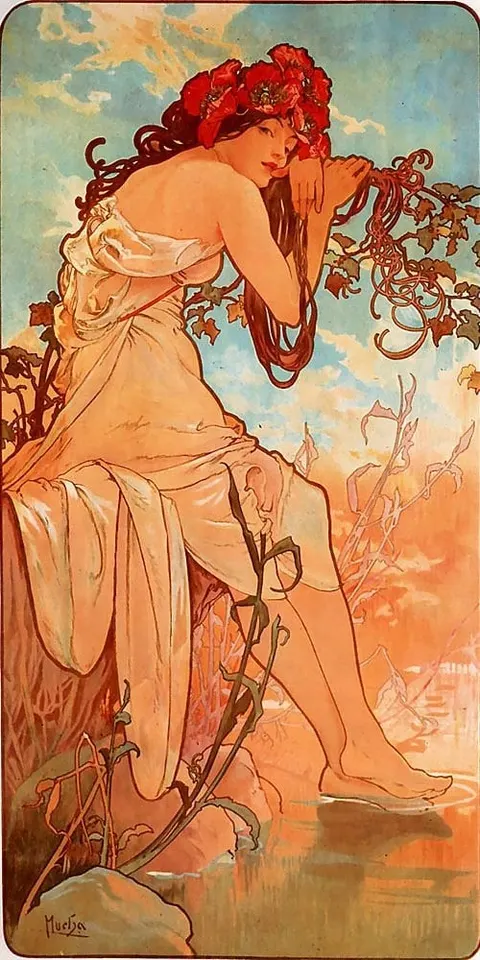

Summer, from The Seasons
Alphonse Mucha, 1896
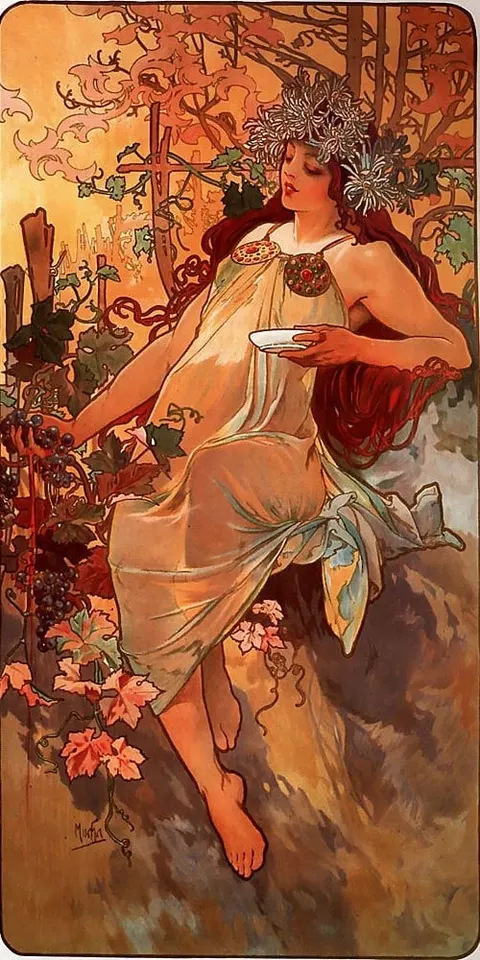

Autumn, from The Seasons
Alphonse Mucha, 1896
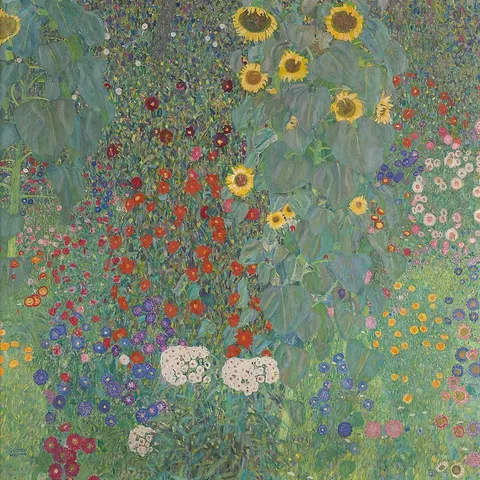

Farm Garden with Sunflowers
Gustav Klimt, 1907
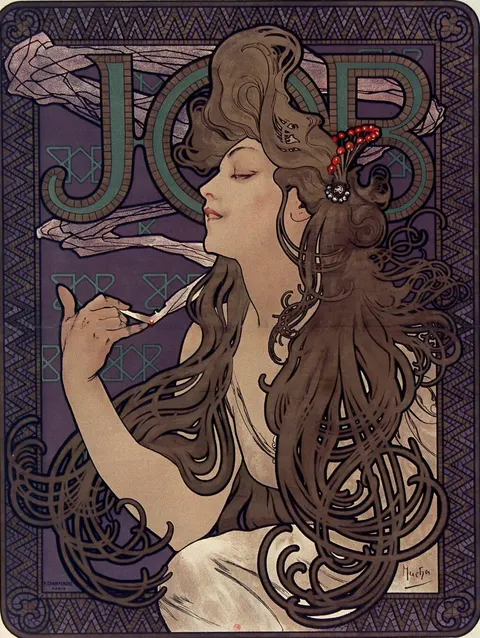

Job
Alphonse Mucha, 1896
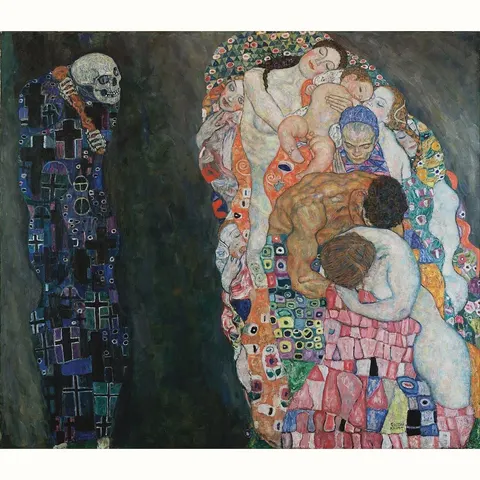

Death and Life
Gustav Klimt, 1910–1915
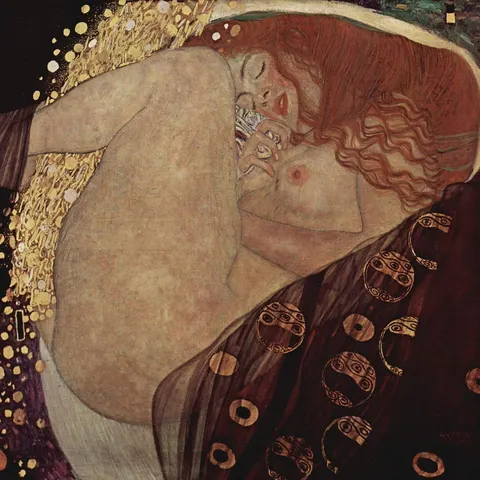

Danaë
Gustav Klimt, 1907
1890s–
Paris and Vienna
12 prints by 2 artists in our collection
More about Art Nouveau Posters
Mucha's break came almost by accident: a Paris printing house needed a last-minute theater poster for Sarah Bernhardt's play Gismonda over the 1894–95 New Year holiday, and Mucha, a jobbing illustrator, was the only artist available. The tall, jewel-toned poster was such a sensation that Bernhardt signed him to a six-year contract, and the 'Mucha style' — flowing hair, halo-like ornament, pastel color — spread across advertising, panels, and jewelry design.
In Vienna, a parallel break with academic art arrived in 1897 when Gustav Klimt and other artists resigned from the conservative Künstlerhaus to found the Vienna Secession, adopting the motto 'To every age its art, to art its freedom.' Klimt's later 'Golden Phase' work, including The Kiss, shares Art Nouveau's flattened gold ornament and decorative pattern even though he worked in oil rather than commercial print.
Both artists treated the female figure as the genre's central decorative motif, but toward different ends: Mucha's posters sold soap, champagne, and cigarettes with idealized, approachable beauty, while Klimt's paintings pursued more symbolic and psychologically charged territory around love, death, and life. Together they represent the two capitals — Paris and Vienna — where fin-de-siècle decorative art reached its peak.