1880s–1900s, France
Post-Impressionism
Post-Impressionism kept Impressionism's bright color and everyday subjects but pushed toward more personal, symbolic, and structured uses of paint. Vincent van Gogh's thick, directional brushwork and saturated color turned landscapes and still lifes into vehicles for emotion rather than pure observation.
Key works
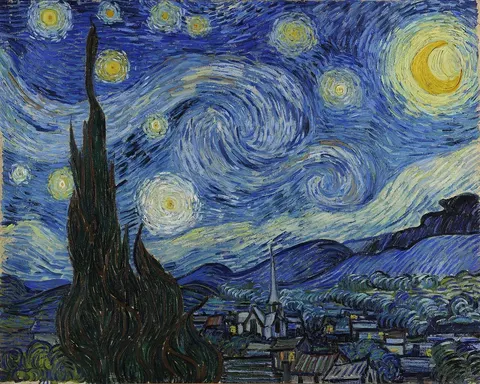

The Starry Night
Vincent van Gogh, 1889
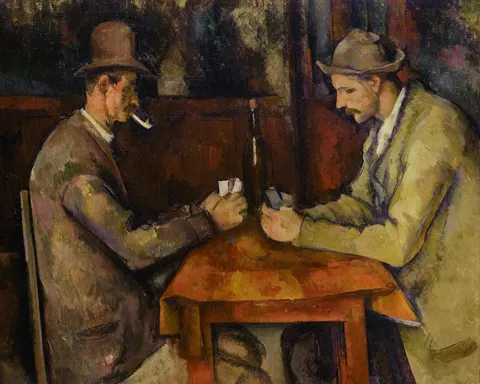

The Card Players
Paul Cézanne, 1890
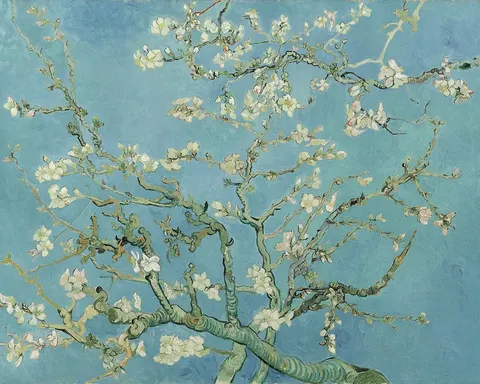

Almond Blossom
Vincent van Gogh, 1890
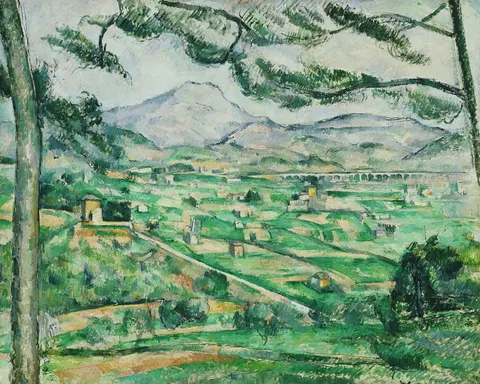

Mont Sainte-Victoire
Paul Cézanne, 1880s
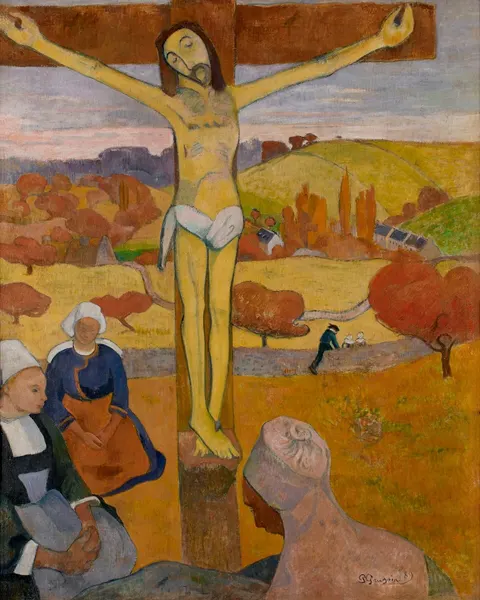

The Yellow Christ
Paul Gauguin, 1889
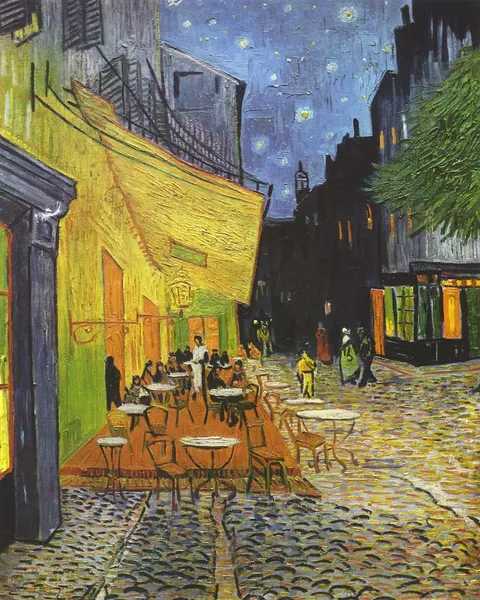

Café Terrace at Night
Vincent van Gogh, 1888
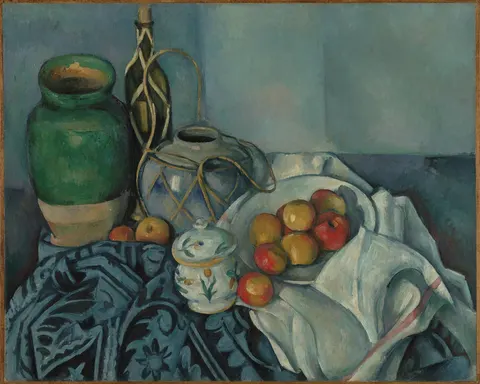

Still Life with Apples
Paul Cézanne, 1893–1894
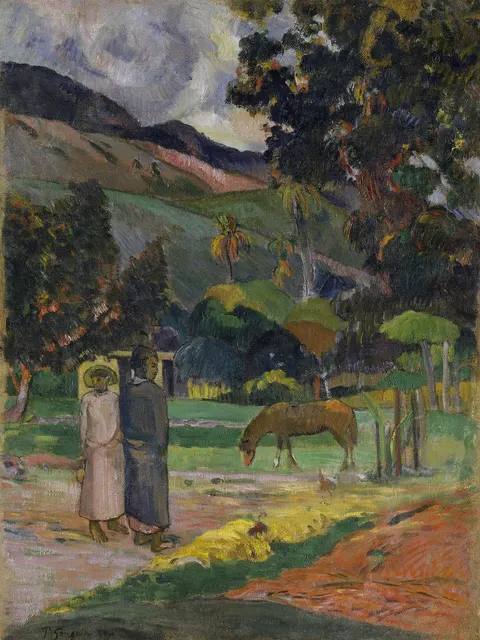

Tahitian Landscape
Paul Gauguin, 1892
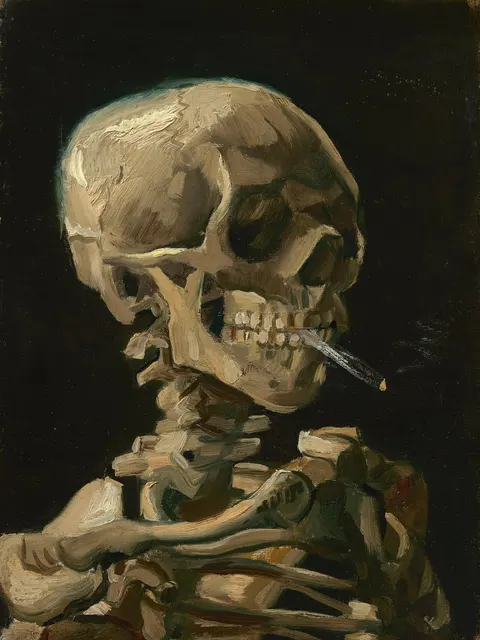

Skull of a Skeleton with Burning Cigarette
Vincent van Gogh, 1886
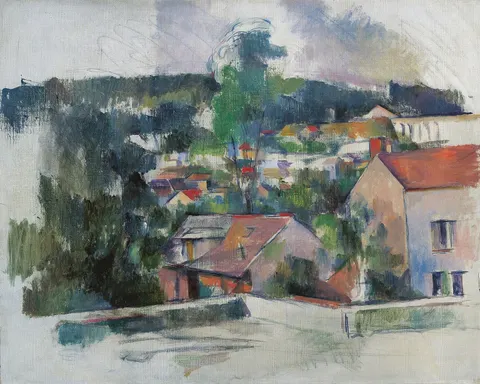

Landscape
Paul Cézanne, 1888–1890
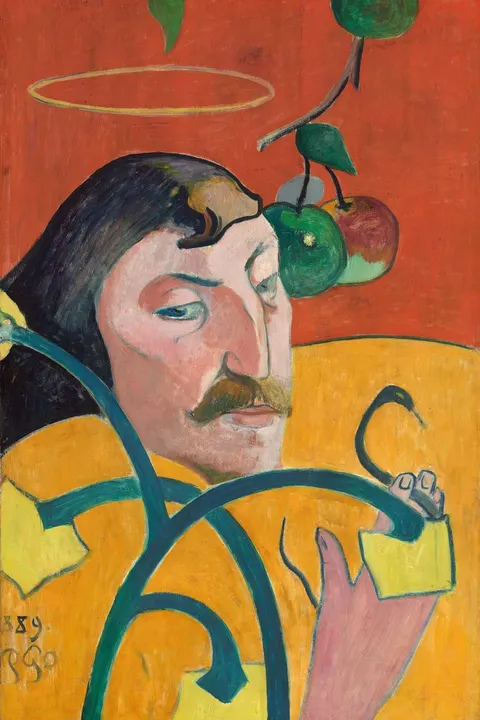

Self-Portrait
Paul Gauguin, 1889
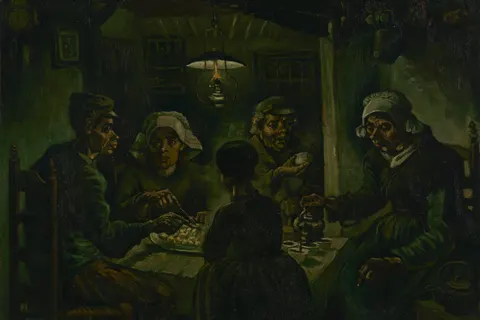

The Potato Eaters
Vincent van Gogh, 1885
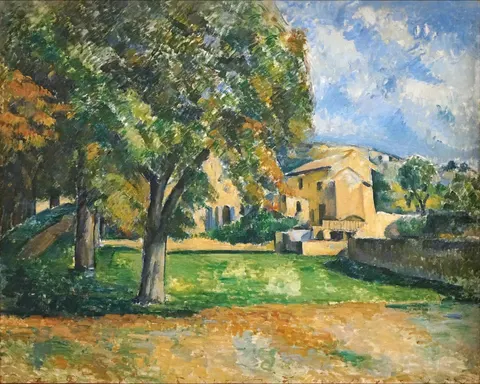

Chestnut and Jas de Bouffan farm
Paul Cézanne, 1886
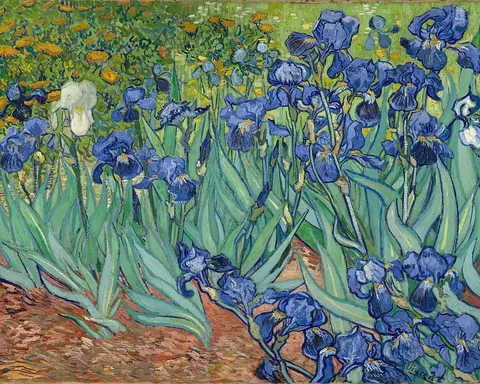

Irises
Vincent van Gogh, 1889
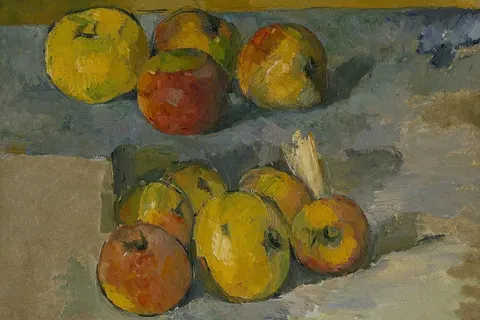

Apples
Paul Cézanne, 1878–1879
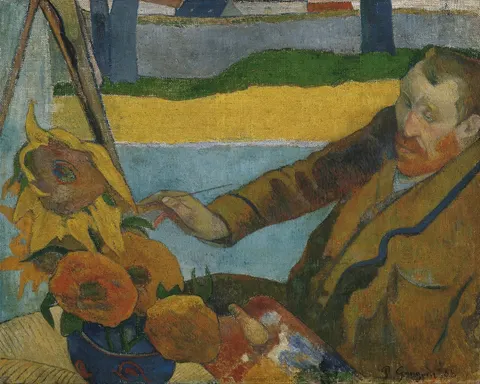

The Painter of Sunflowers
Paul Gauguin, 1888
1880s–
France
78 prints by 3 artists in our collection
More about Post-Impressionism
The term was coined by British critic Roger Fry for a 1910 London exhibition, decades after the painters it described — van Gogh, Cézanne, Gauguin, Seurat — had mostly stopped working (van Gogh died in 1890). It was never a unified movement with a manifesto; it's a retrospective label for artists who inherited Impressionist color but rejected its purely optical aims.
Van Gogh arrived in Paris in 1886 already trained in darker Dutch realism, and Impressionist color transformed his palette almost overnight. Within four years, working first in Paris, then Arles, Saint-Rémy, and finally Auvers-sur-Oise, he developed his signature impasto — paint laid on so thickly the brushstrokes read as texture and motion, not just color.
Where Monet used broken color to record fleeting atmospheric effects, van Gogh used it to express interior states: the swirling sky over Saint-Rémy, the claustrophobic warmth of his Arles bedroom, the frank stare of a bowl of sunflowers. That expressive use of paint became a direct bridge to Fauvism and German Expressionism in the following decades.