Late 1700s–mid 1800s, Europe
Romanticism
Romanticism put feeling, imagination and the force of nature ahead of classical order. In this collection it means J. M. W. Turner's storms and blazing skies, and Francisco Goya's dark visions of war and superstition.
Key works
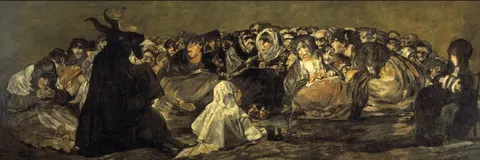

Witches' Sabbath
Francisco Goya, 1820–1823
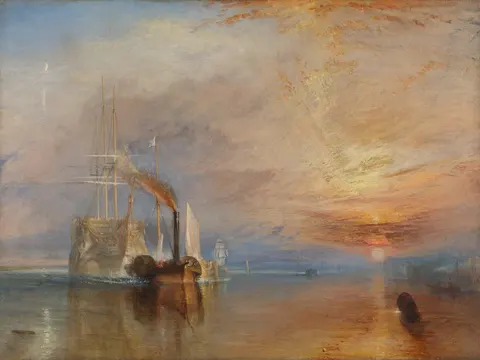

The Fighting Temeraire
J. M. W. Turner, 1839
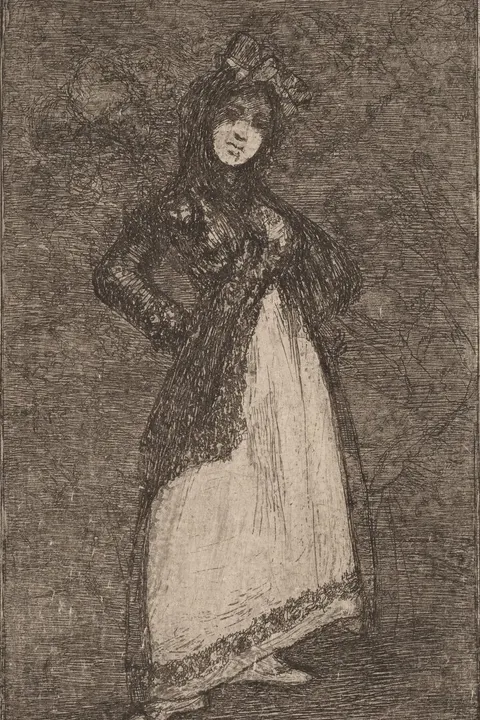

Maja
Francisco Goya, 1824–1828
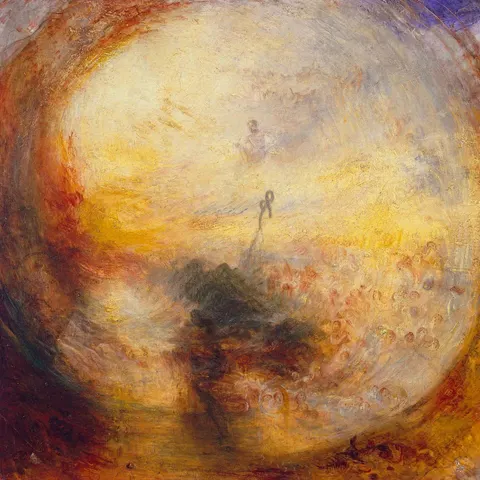

Light and Colour (Goethe's Theory) – The Morning after the Deluge – Moses Writing the Book of Genesis
J. M. W. Turner, 1843
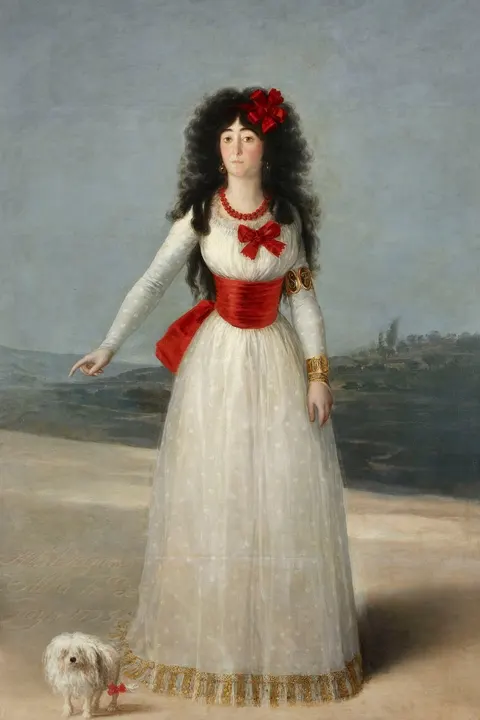

Portrait of the Duchess of Alba
Francisco Goya, 1795
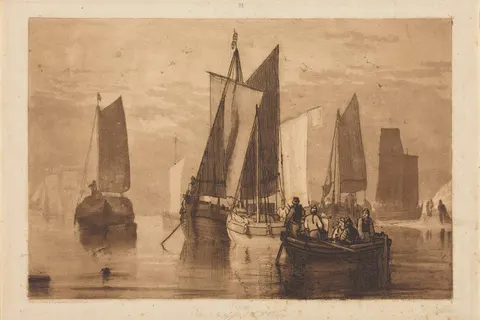

Calm
J. M. W. Turner, published 1812
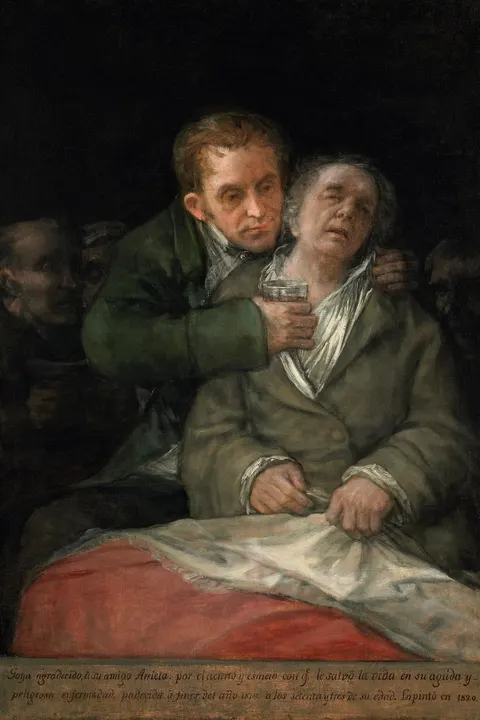

Self-portrait with Dr Arrieta
Francisco Goya, 1820
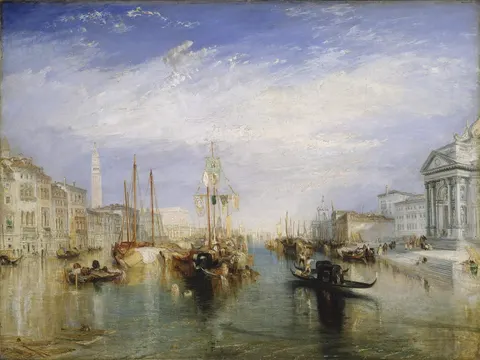

Venice, from the Porch of Madonna della Salute
J. M. W. Turner, 1830s
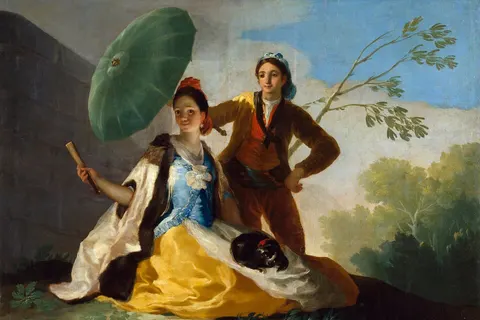

The Parasol
Francisco Goya, 1777
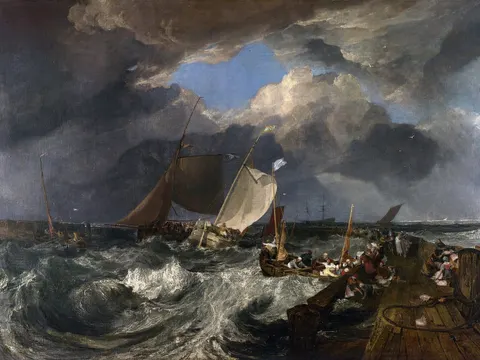

Calais Pier
J. M. W. Turner, 1803
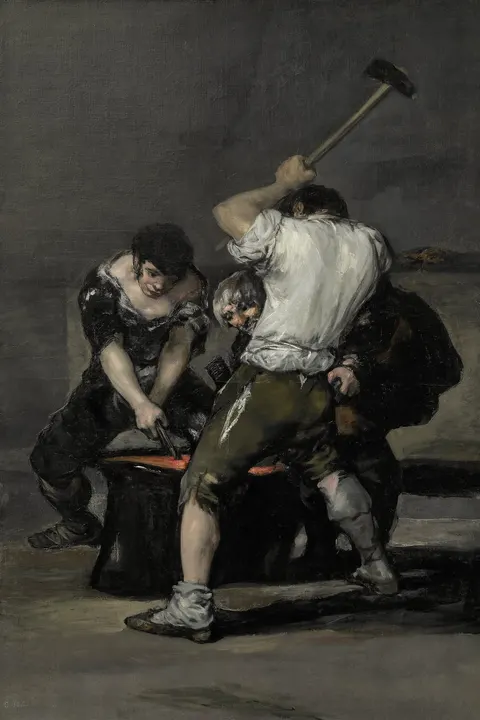

The Forge
Francisco Goya, 1819
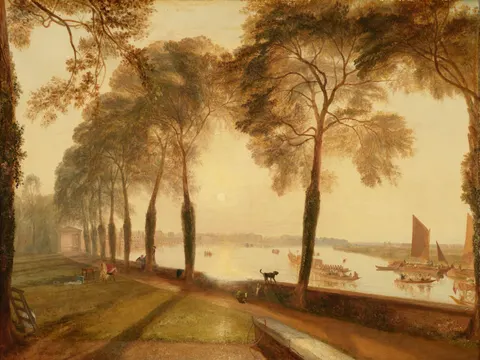

Mortlake Terrace
J. M. W. Turner, 1827
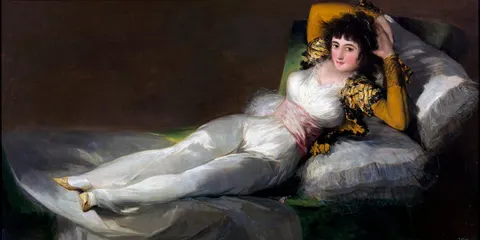

The Clothed Maja
Francisco Goya, 1800–1807
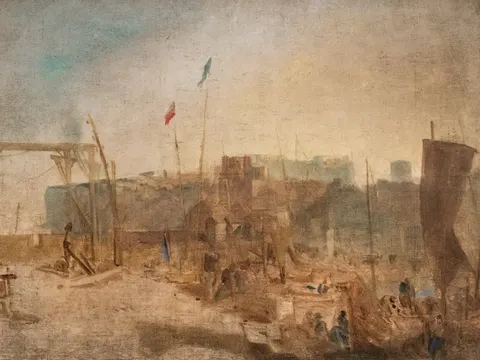

Margate
J. M. W. Turner, 1806–1807
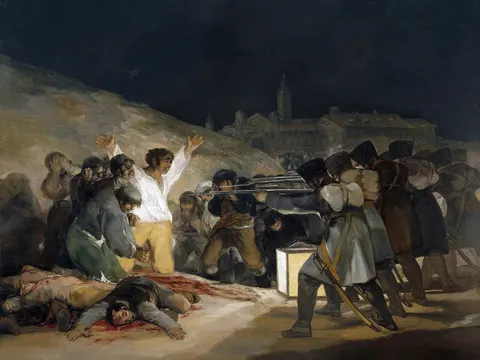

The Third of May 1808
Francisco Goya, 1814
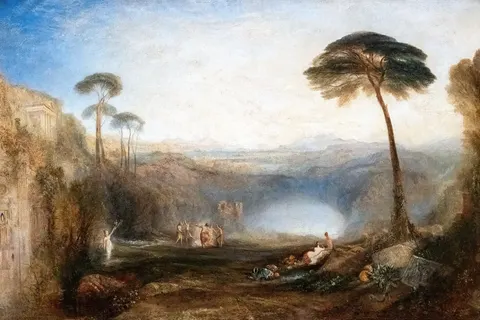

The Golden Bough
J. M. W. Turner, 1834
Late 1700s–
Europe
50 prints by 2 artists in our collection
More about Romanticism
The movement peaked between about 1800 and 1850, and its painters valued awe and even terror as honest responses to the world. Behind that sat an older idea, the sublime: Edmund Burke argued in 1756 that it was separate from beauty, a mix of fear and attraction. The German painter Caspar David Friedrich put the Romantic creed most bluntly: "the artist's feeling is his law".
In painting, it showed first in landscape, as British artists from the 1760s turned to wild country and storms. Turner took English landscape to its Romantic extreme, and the critic John Ruskin held him up as proof that paint could be as sublime as poetry. Watch the hail in his Fifth Plague of Egypt, or the railway bridge of Rain, Steam and Speed, where the objects almost dissolve into weather and motion. Monet and Pissarro saw his work in London in 1870, and it left a powerful mark on both.
Goya fits less neatly. He saw himself as a man of the Enlightenment and kept much of his classical training, yet no painter of the time put his own feelings and private imagination on show more fully. A royal portraitist by profession, he also made the etched Caprichos and, late in life, the Black Paintings, oils put straight onto the plaster of his farmhouse, among them Witches' Sabbath. Look, too, at his loose, visible brushwork, a freedom he shared with many Romantic painters.