1471–1528 · German · Northern Renaissance
Albrecht Dürer Art Prints
Albrecht Dürer (1471–1528) made his name across Europe while still in his twenties on the strength of his woodcuts, prints that travelled far beyond his home city of Nuremberg. He brought classical motifs and the nude into Northern art, and that secured his place among the most important figures of the Northern Renaissance.
Shop Albrecht Dürer
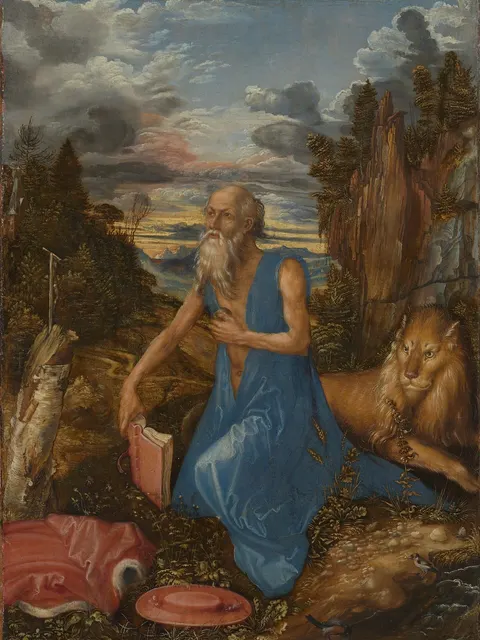

St. Jerome in the Wilderness
Albrecht Dürer, c. 1496
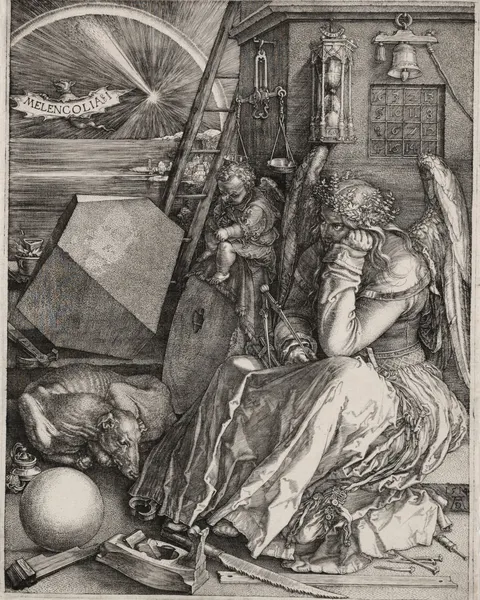

Melencolia I
Albrecht Dürer, 1514
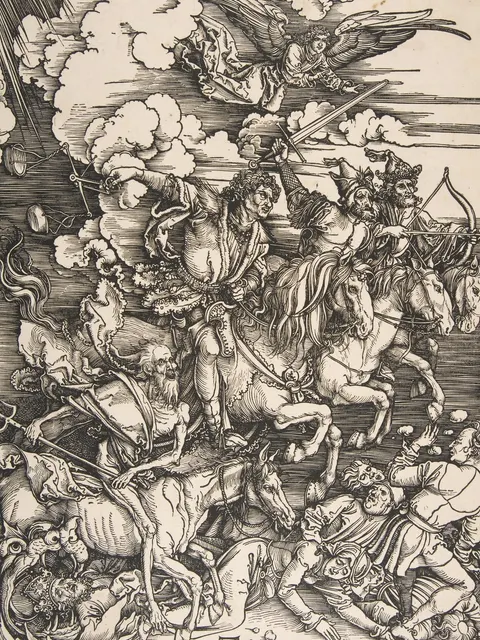

Four Horsemen of the Apocalypse
Albrecht Dürer, c. 1497–1498
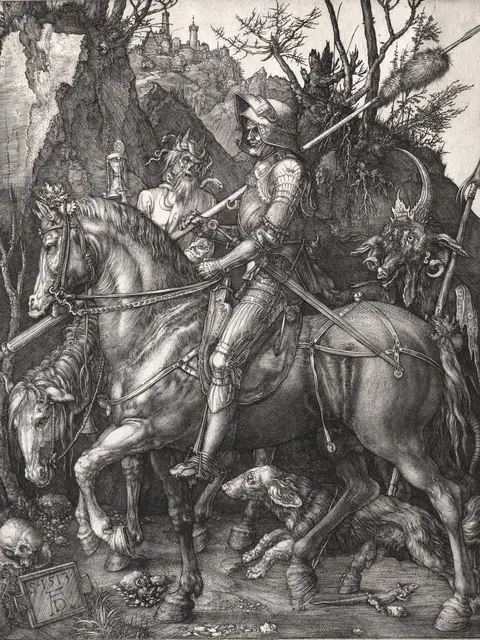

Knight, Death, and the Devil
Albrecht Dürer, 1513
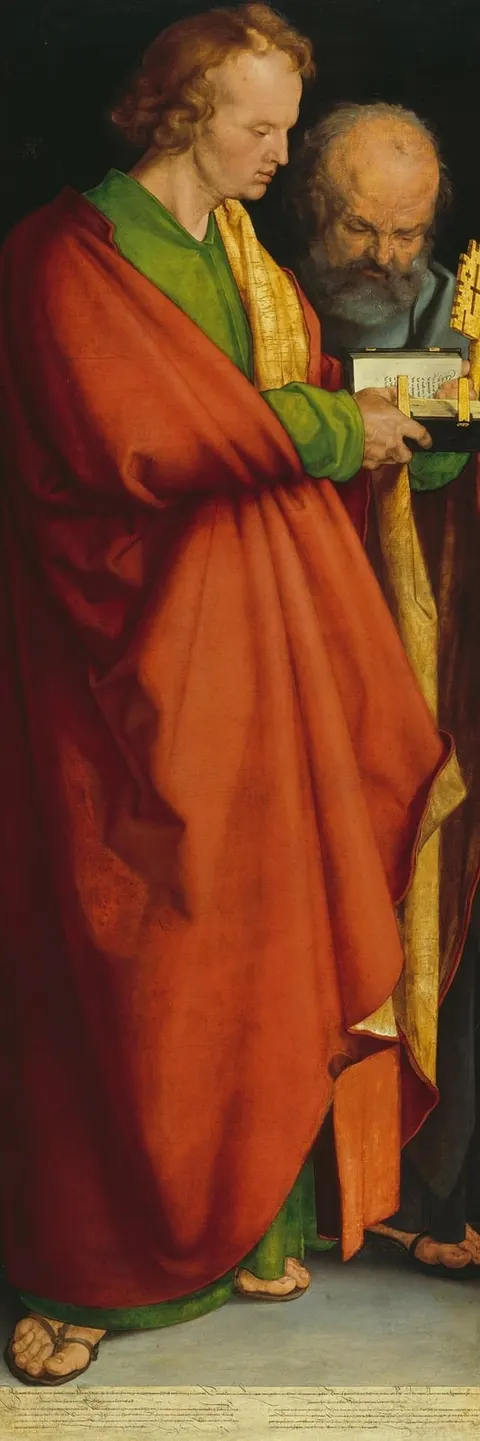

The Four Apostles: Saints John and Peter
Albrecht Dürer, 1526
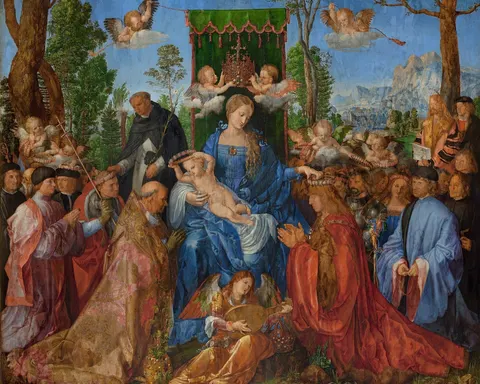

Feast of the Rosary
Albrecht Dürer, 1506
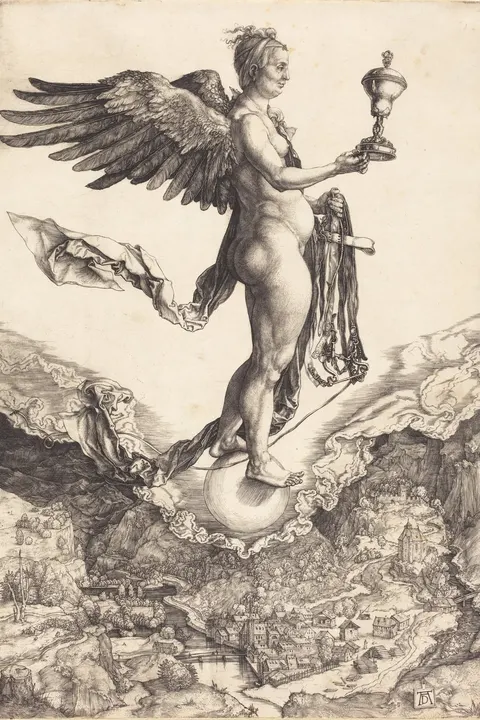

Nemesis (The Great Fortune)
Albrecht Dürer, c. 1501–1502
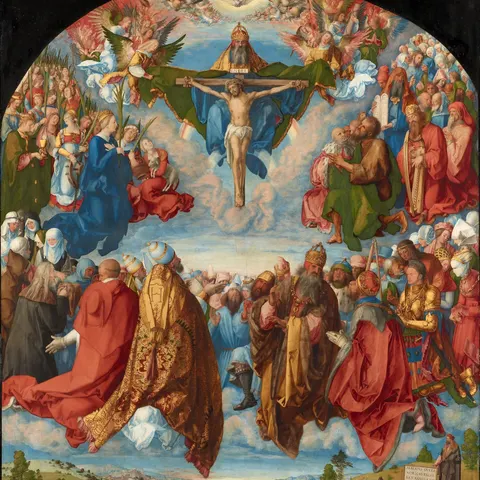

Adoration of the Trinity
Albrecht Dürer, 1511
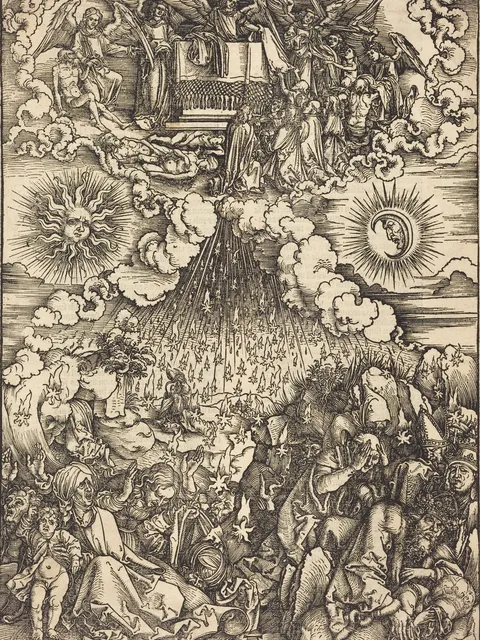

The Opening of the Fifth and Sixth Seals
Albrecht Dürer, c. 1497
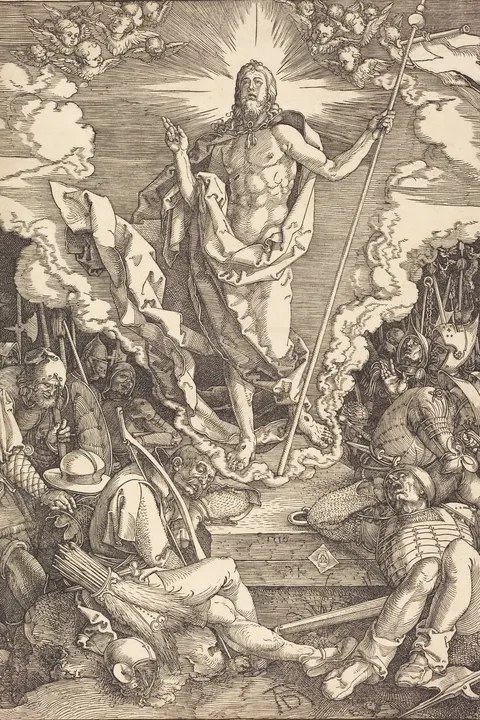

The Resurrection
Albrecht Dürer, 1510
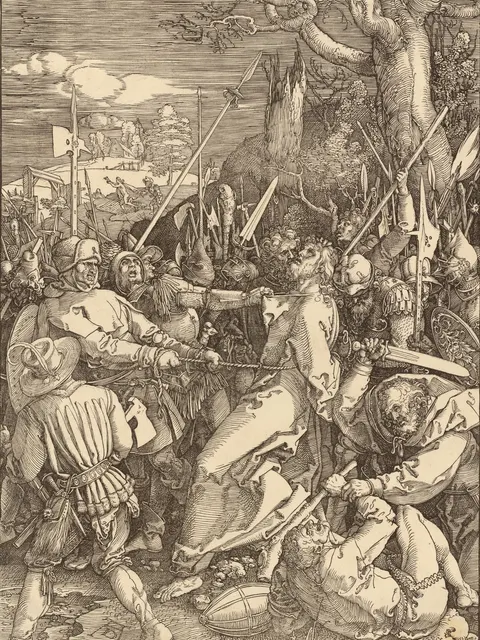

The Betrayal of Christ
Albrecht Dürer, 1510
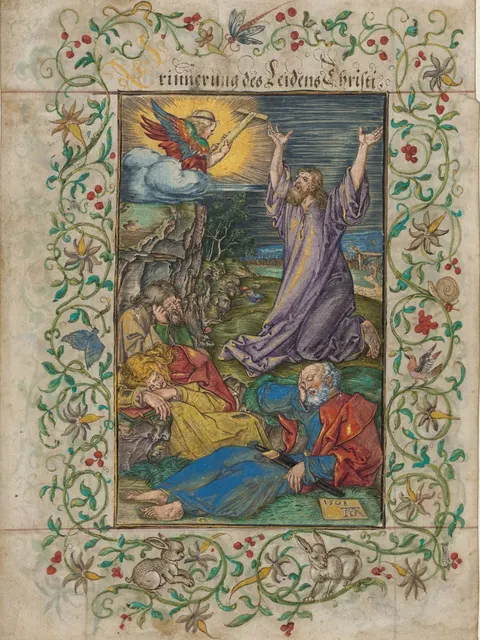

Christ on the Mount of Olives
Albrecht Dürer, 1508 and 1580s
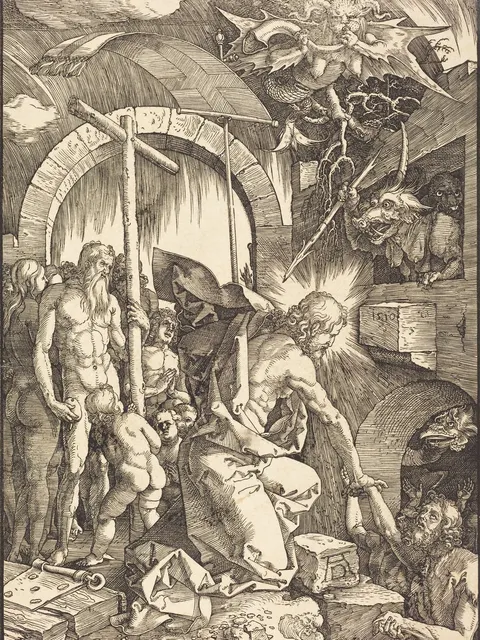

Christ in Limbo
Albrecht Dürer, 1510
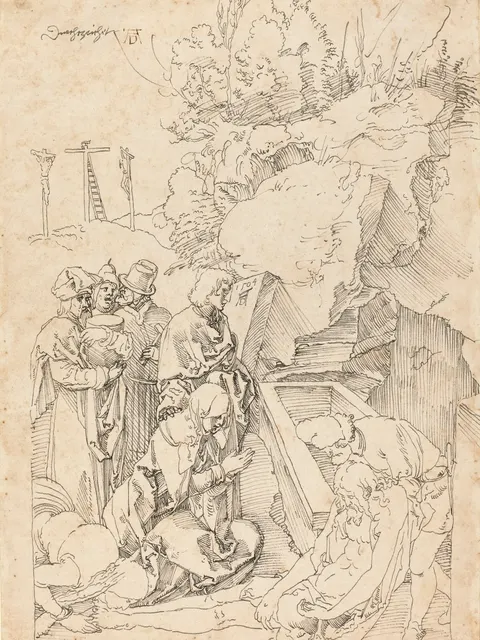

The Entombment
Albrecht Dürer, 1504
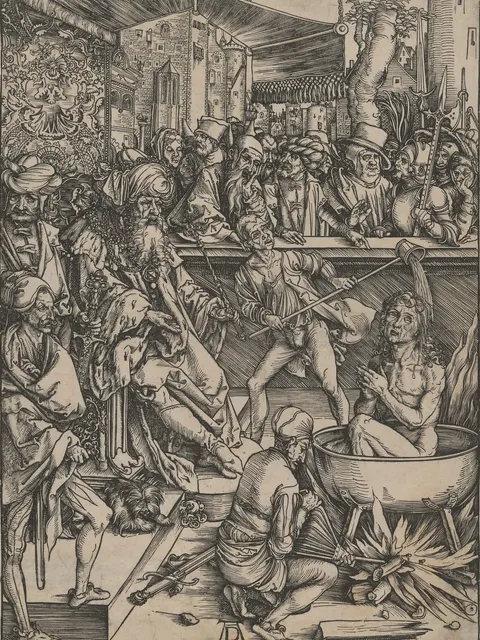

The Martyrdom of Saint John
Albrecht Dürer, probably c. 1496–1498
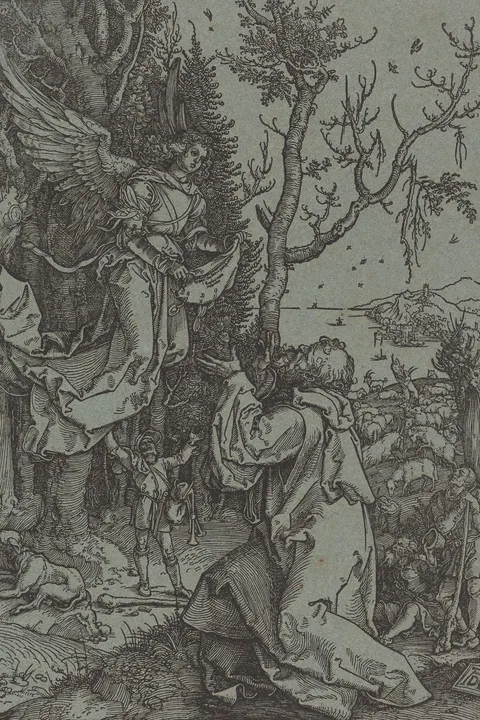

Joachim and the Angel
Albrecht Dürer, c. 1504
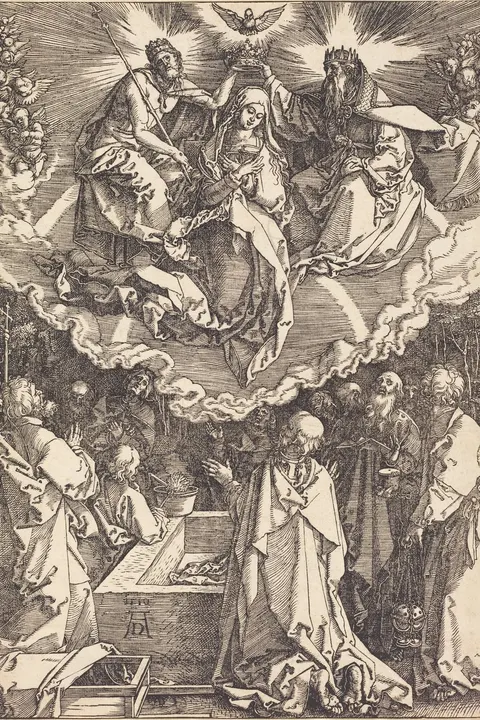

The Assumption and Coronation of the Virgin
Albrecht Dürer, 1510
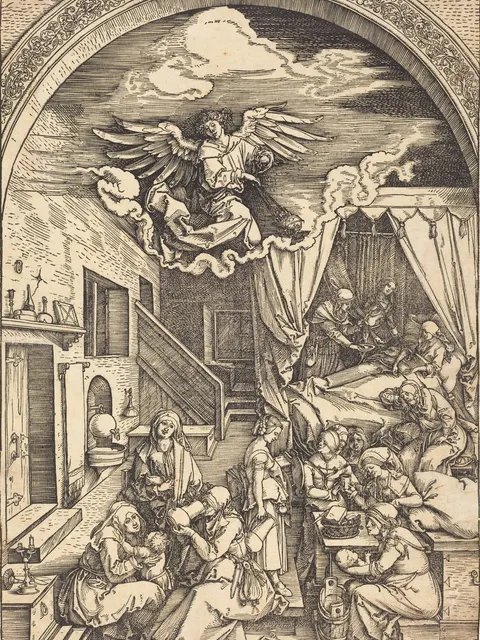

The Birth of the Virgin
Albrecht Dürer, c. 1503–1504
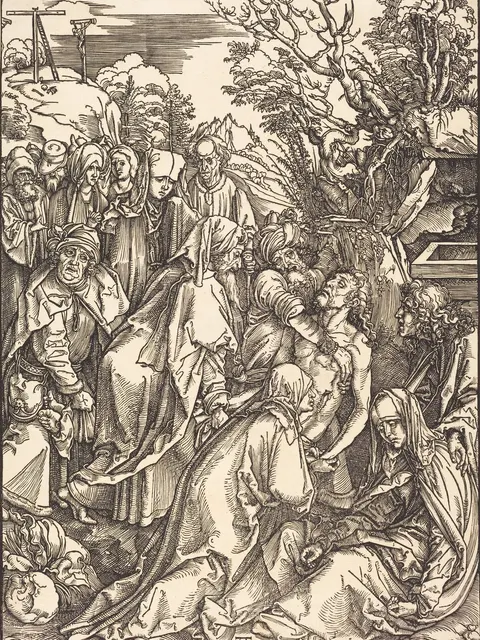

The Deposition
Albrecht Dürer, c. 1497
![The Triumphal Chariot of Maximilian I (The Great Triumphal Car) [plate 1 of 8] by Albrecht Dürer, 1523](https://images.galleryoftheages.com/art/albrecht-durer/the-triumphal-chariot-of-maximilian-i-the-great-triumphal-car-plate-1-of-8-by-albrecht-durer.w480.webp)

The Triumphal Chariot of Maximilian I (The Great Triumphal Car) [plate 1 of 8]
Albrecht Dürer, 1523
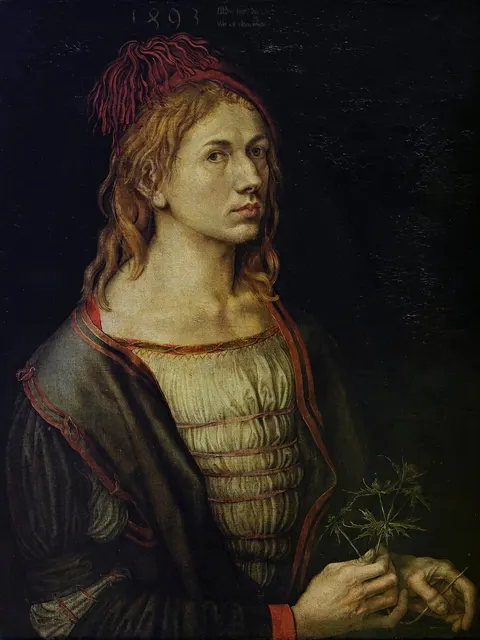

Portrait of the Artist Holding a Thistle
Albrecht Dürer, 1493
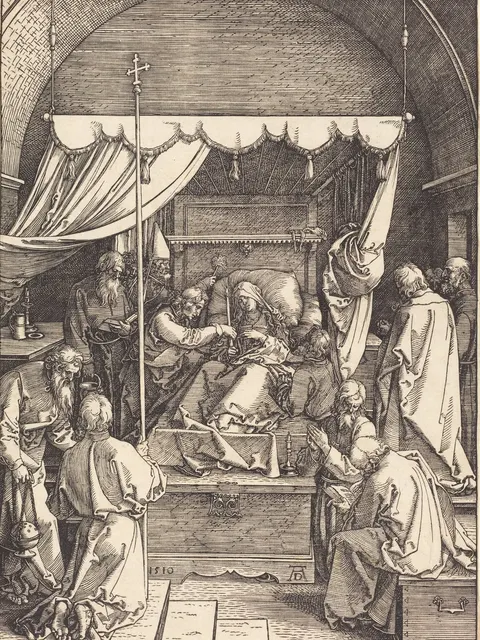

The Death of the Virgin
Albrecht Dürer, 1510
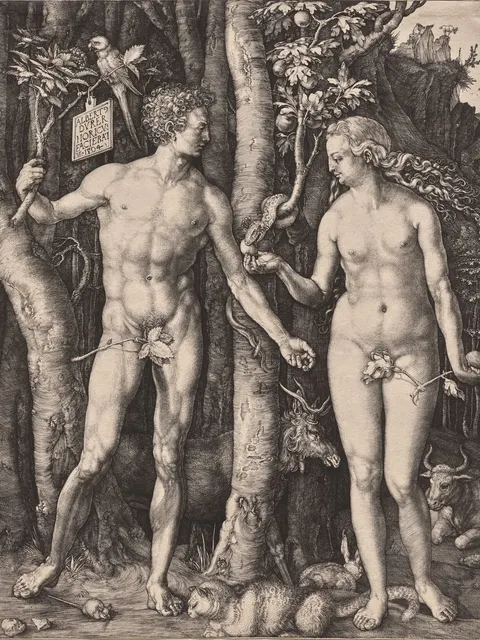

Adam and Eve
Albrecht Dürer, 1504
About Albrecht Dürer
Born 1471
1490
1500
1510
Died 1528
His father was a goldsmith who had come to Nuremberg from Hungary, and the boy learned goldsmithing and drawing at home before an apprenticeship with Michael Wolgemut, whose busy workshop cut woodblocks for books. A silverpoint self-portrait he drew at thirteen still survives. Two trips to Venice, where he admired Giovanni Bellini, shaped the way he combined Italian ideas with Northern forms. On the second trip, the German community in Venice commissioned the Feast of the Rosary, in which Pope Julius II and Emperor Maximilian I kneel with their crowns off and Dürer paints himself at the upper right.
His Apocalypse, a series of sixteen designs dated 1498, includes the woodcut Four Horsemen of the Apocalypse. Specialist craftsmen most likely cut his blocks, but he mastered the burin for engraving himself, a skill he probably learned from his goldsmith father. Prints paid better than painting, he complained, and between 1513 and 1516 he painted nothing at all.
His engravings reward a slow look. In Adam and Eve (1504), the only engraving he signed with his full name, the elk, rabbit, cat and ox stand for the four temperaments, and the cat eyeing a mouse hints at trouble ahead. In Knight, Death and the Devil (1513), Death holds an hourglass exactly half run. Melencolia I (1514) hides a magic square whose numbers add up to 34 in every direction. Even his early painting of St. Jerome in the Wilderness has a surprise: its back shows what looks like a comet or meteor.
From 1512 Emperor Maximilian I was his main patron, and late in life he gave The Four Apostles, a pair of panels with two saints on each, to the City of Nuremberg. He died there in 1528, aged fifty-six, and his house, where his workshop stood, is still a Nuremberg landmark.
Albrecht Dürer is part of our Renaissance collection.
Related artists
Questions about Albrecht Dürer prints
- What are the Albrecht Dürer prints made of?
- Every Albrecht Dürer print is printed to order in the USA. Fine art prints use 340gsm cold press fine art paper, 100% cotton rag and acid-free, with archival inks. Canvases use 360gsm archival canvas, stretched over solid wood stretcher bars.
- What size Albrecht Dürer print should I choose?
- It depends on the wall. As a rule of thumb, aim for artwork roughly two-thirds the width of the furniture it hangs above — check each artwork's page for a size guide against the original dimensions.
- Canvas, framed, or fine art print?
- Canvas and framed canvas suit statement walls and gift-giving, and arrive ready to hang. Fine art prints on cotton rag paper are a lower-cost way to try a piece before committing to a larger format.
- How long does delivery take?
- Every print is made to order and arrives within 8 business days, often sooner. If it arrives damaged or faulty, we replace or refund it within 90 days.