1760–1849 · Japanese · Ukiyo-e
Katsushika Hokusai Art Prints
Katsushika Hokusai (1760–1849) was the most internationally celebrated printmaker of Japan's Edo period, a relentless experimenter who reinvented his style and name dozens of times across nearly seven decades of work. Best known for Thirty-six Views of Mount Fuji, he elevated the ukiyo-e woodblock print from popular entertainment into fine art, and his bold, graphic compositions later reshaped European painting through the Japonisme movement.
Shop Katsushika Hokusai
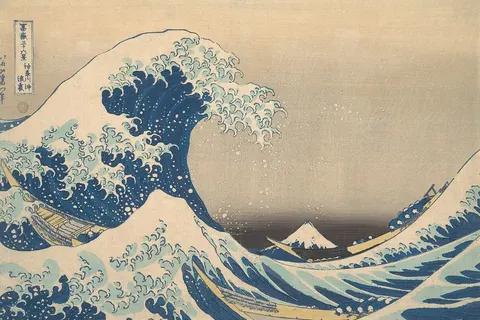

Under the Wave off Kanagawa (The Great Wave)
Katsushika Hokusai, c. 1831
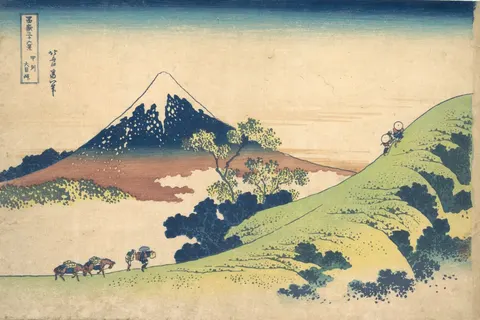

The Inume Pass in Kai Province
Katsushika Hokusai, c. 1831–1832
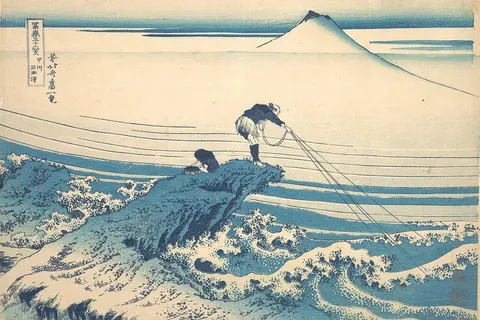

Kajikazawa in Kai Province
Katsushika Hokusai, c. 1830–1832
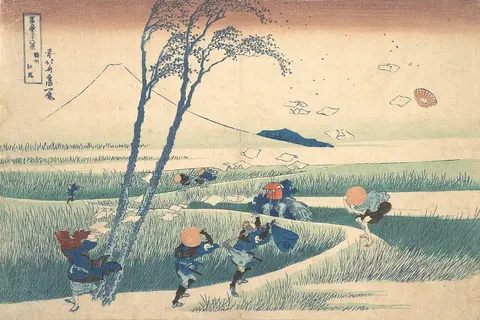

Ejiri in Suruga Province
Katsushika Hokusai, c. 1830–1832
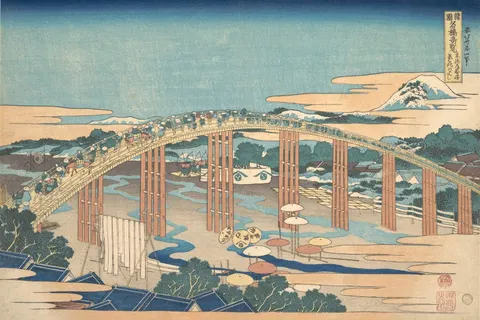

Yahagi Bridge at Okazaki on the Tōkaidō
Katsushika Hokusai, 1827–1830
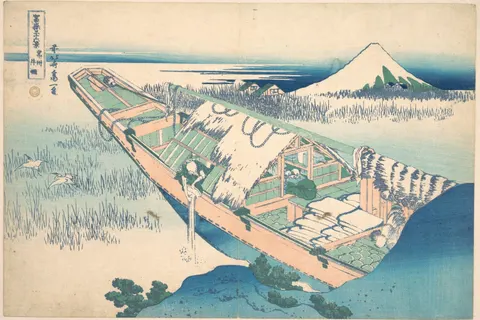

Ushibori in Hitachi Province
Katsushika Hokusai, c. 1830–1832
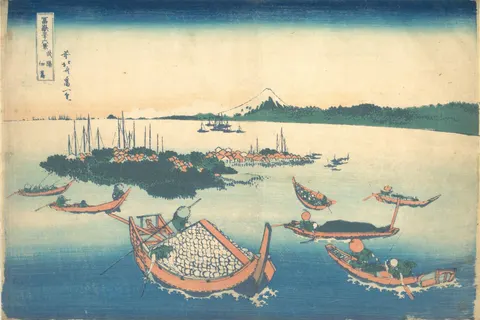

Tsukudajima in Musashi Province
Katsushika Hokusai, c. 1830–1832
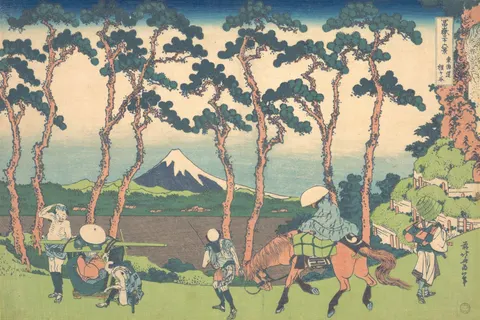

Hodogaya on the Tōkaidō
Katsushika Hokusai, c. 1830–1832
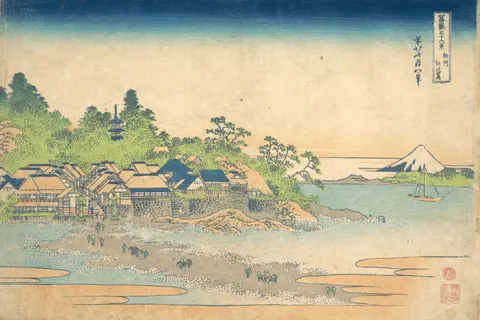

Enoshima in Sagami Province
Katsushika Hokusai, c. 1830–1832
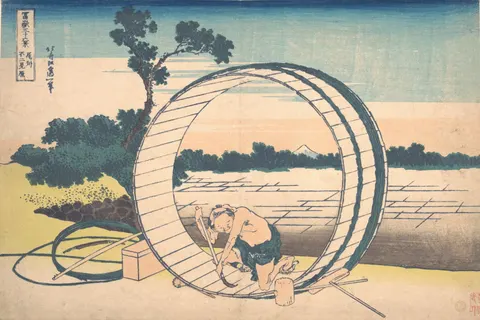

Fujimigahara in Owari Province
Katsushika Hokusai, c. 1830–1832
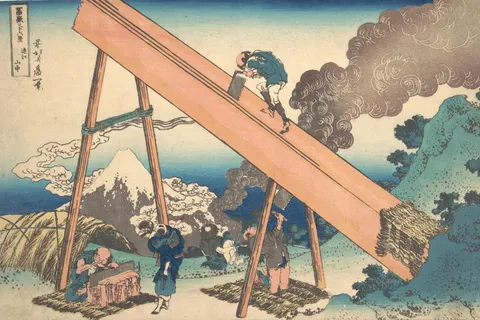

In the Mountains of Tōtomi Province
Katsushika Hokusai, c. 1830–1832
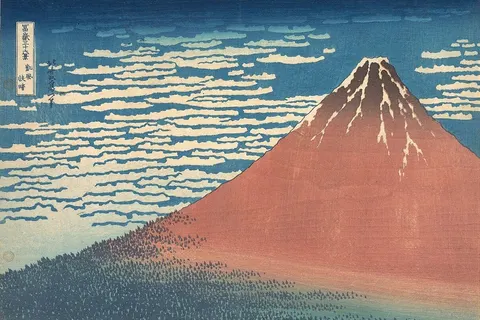

Fine Wind, Clear Morning (Red Fuji)
Katsushika Hokusai, c. 1830–1832
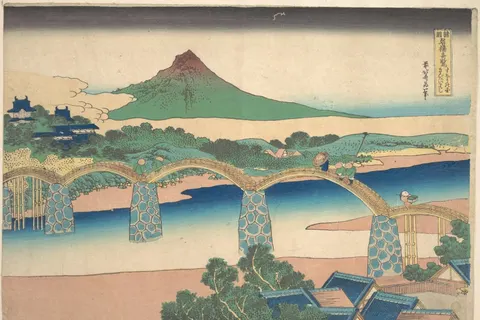

Kintai Bridge in Suō Province
Katsushika Hokusai, 1827–1830
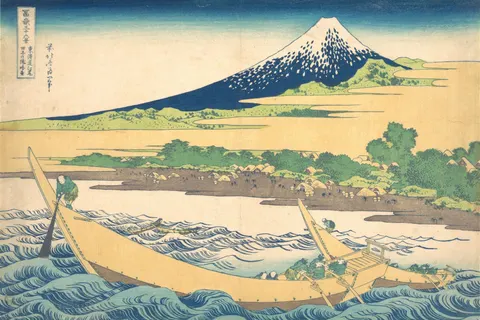

Tago Bay near Ejiri on the Tōkaidō
Katsushika Hokusai, c. 1830–1832
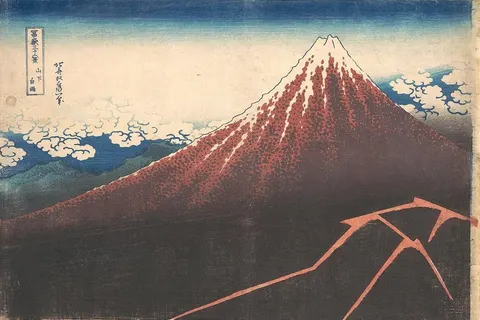

Fuji Above the Lightning (Storm Below Mount Fuji)
Katsushika Hokusai, c. 1830–1832
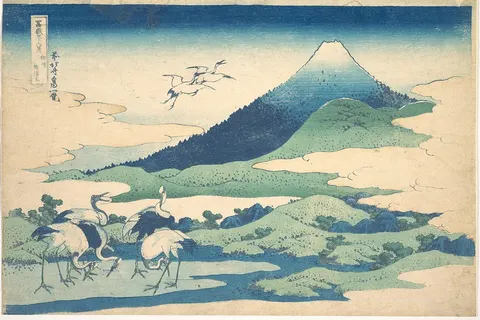

Umezawa in Sagami Province
Katsushika Hokusai, c. 1830–1832
About Katsushika Hokusai
Born 1760
1780
1800
1820
Died 1849
Born in 1760 in the Katsushika district of Edo (modern Tokyo), Hokusai apprenticed as a woodblock carver before training under the ukiyo-e master Katsukawa Shunshō in his teens. Over a career spanning nearly seventy years he produced an estimated 30,000 paintings, sketches, and prints, and worked under more than thirty different names, each change marking a deliberate shift in style, subject, or artistic ambition.
His late masterpiece, Thirty-six Views of Mount Fuji (c. 1830–1832), used the newly available synthetic pigment Prussian blue to striking effect and made Hokusai's name synonymous with the sacred mountain. The series paired everyday scenes of farmers, fishermen, and travelers with Fuji's constant, distant presence, fusing landscape painting with genre observation in a way no Japanese printmaker had attempted before.
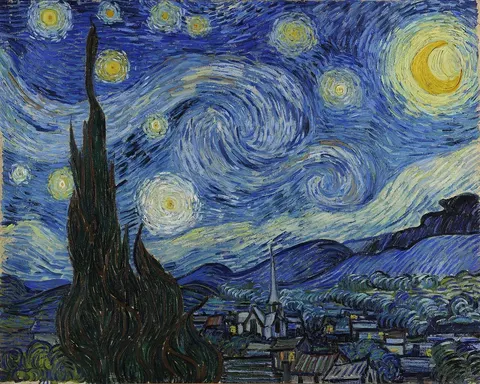
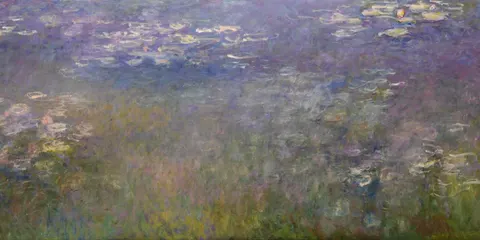
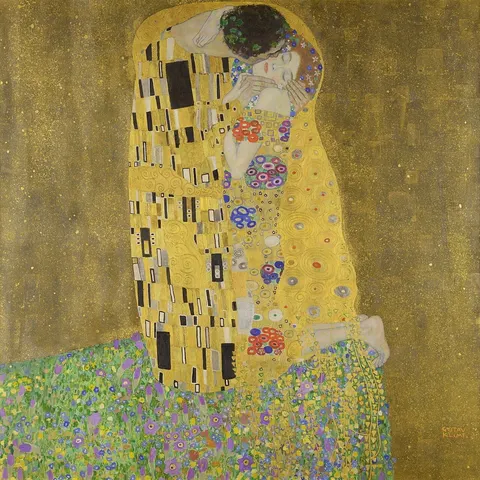
In 1834, in his mid-seventies, he adopted the name Gakyō Rōjin, 'the old man mad about painting,' declaring that his best work still lay ahead of him. He died in 1849 at age 88, reportedly still dissatisfied with his own mastery. Decades later his prints reached Paris via the Japonisme craze and were closely studied by Monet, Van Gogh, and other Impressionists, cementing his influence on modern Western art.
Katsushika Hokusai is part of our Japanese Woodblock Prints collection.
Questions about Katsushika Hokusai prints
- What are the Katsushika Hokusai prints made of?
- Every Katsushika Hokusai print is printed to order in the USA. Fine art prints use 340gsm cold press fine art paper, 100% cotton rag and acid-free, with archival inks. Canvases use 360gsm archival canvas, stretched over solid wood stretcher bars.
- What size Katsushika Hokusai print should I choose?
- It depends on the wall. As a rule of thumb, aim for artwork roughly two-thirds the width of the furniture it hangs above — check each artwork's page for a size guide against the original dimensions.
- Canvas, framed, or fine art print?
- Canvas and framed canvas suit statement walls and gift-giving, and arrive ready to hang. Fine art prints on cotton rag paper are a lower-cost way to try a piece before committing to a larger format.
- How long does delivery take?
- Every print is made to order and arrives within 8 business days, often sooner. If it arrives damaged or faulty, we replace or refund it within 90 days.