1866–1944 · Russian · Abstract art
Wassily Kandinsky Art Prints
Kandinsky thought of painting as a kind of music, and the titles on his canvases are his own musical terms: an Improvisation was a spontaneous picture, a Composition a more elaborate one. Born in Moscow, he only began to study painting at 30, yet he is generally credited as one of the pioneers of abstraction in Western art.
Shop Wassily Kandinsky
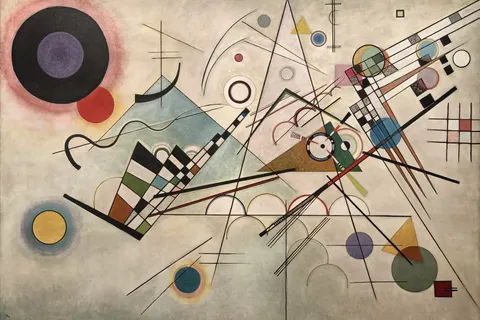

Composition VIII
Wassily Kandinsky, 1923
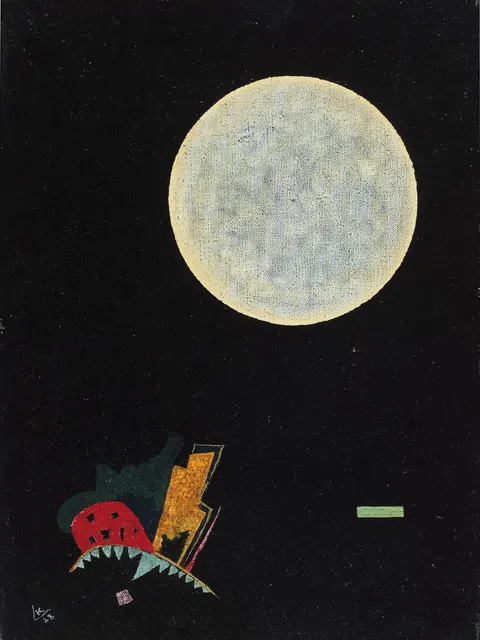

A Circle (A)
Wassily Kandinsky, 1928


Composition J
Wassily Kandinsky, 1916
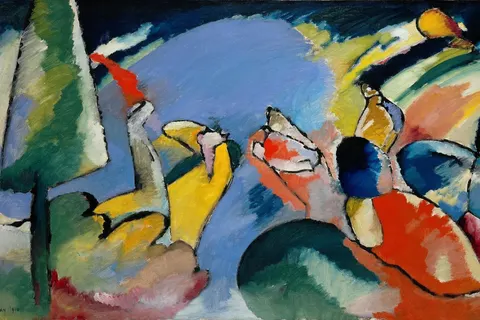

Improvisation 14
Wassily Kandinsky, 1910
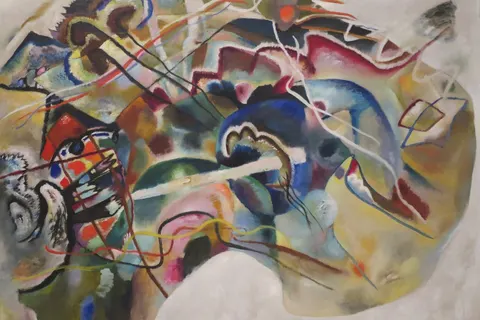

Painting with White Border
Wassily Kandinsky, 1913
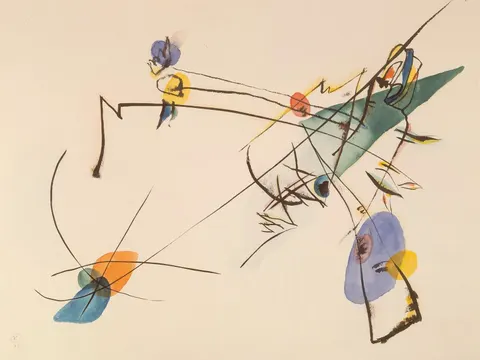

Simple
Wassily Kandinsky, 1916
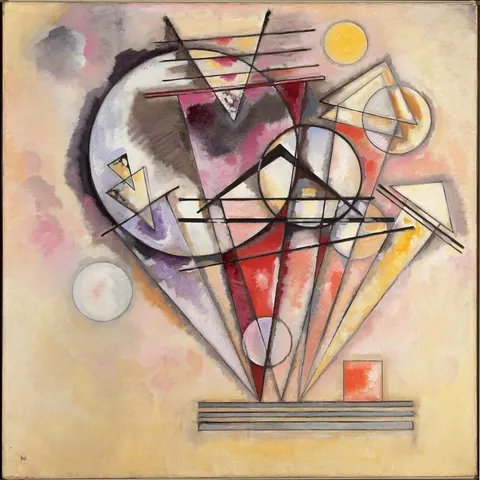

On the Points
Wassily Kandinsky, 1928
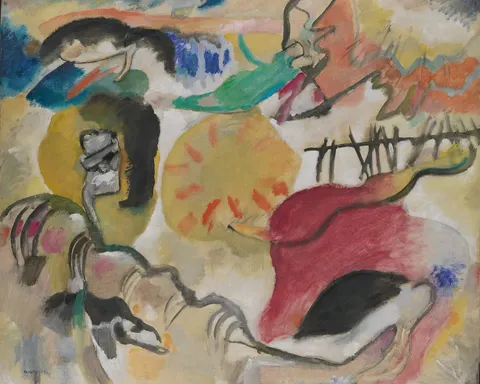

Improvisation 27 (Garden of Love II)
Wassily Kandinsky, 1912
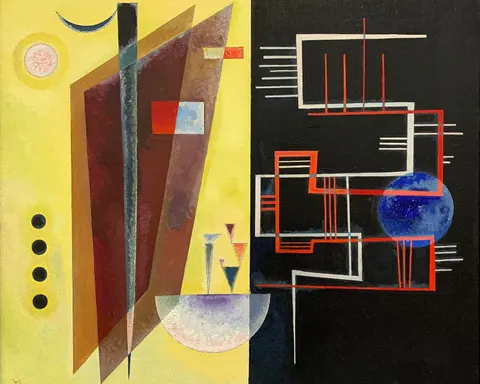

Inner Alliance
Wassily Kandinsky, 1929
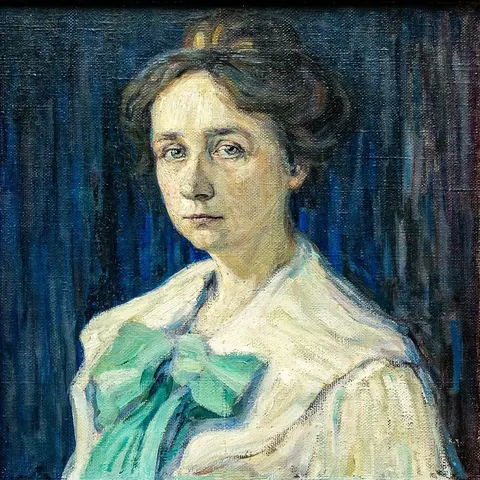

Gabriele Münter
Wassily Kandinsky, 1905
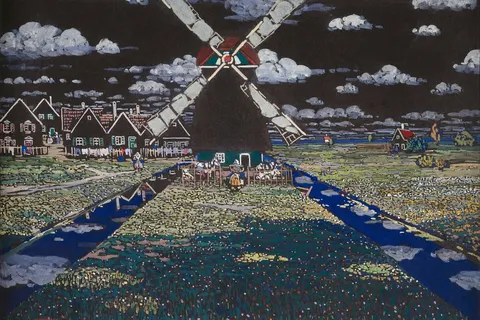

Windmill in Holland
Wassily Kandinsky, 1904
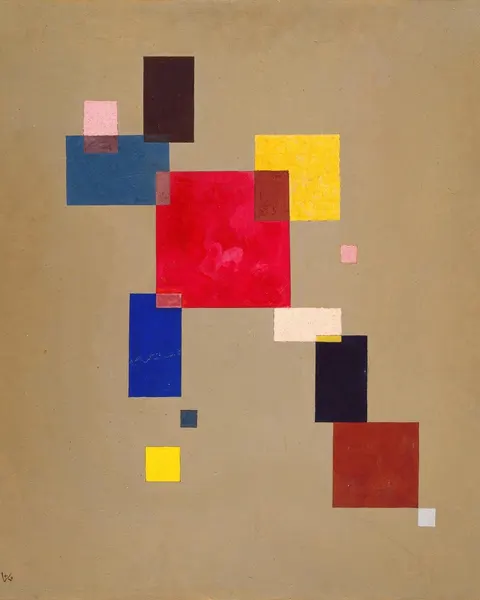

Thirteen Rectangles
Wassily Kandinsky, 1930
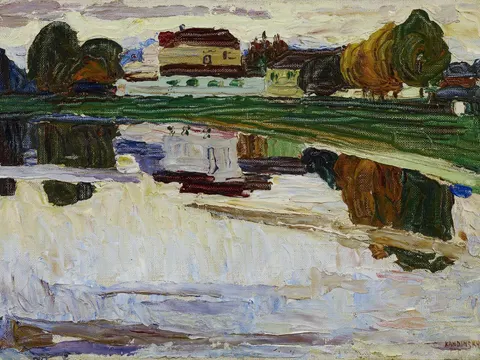

Nymphenburg
Wassily Kandinsky, 1904
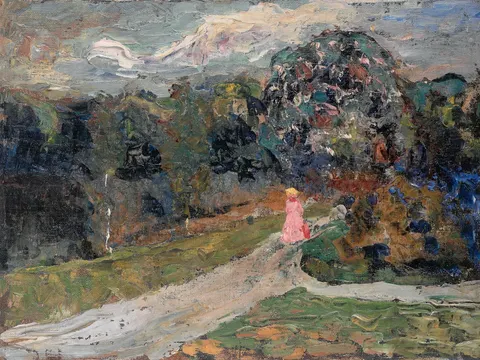

Dusk in an English Garden, Munich
Wassily Kandinsky, c. 1901
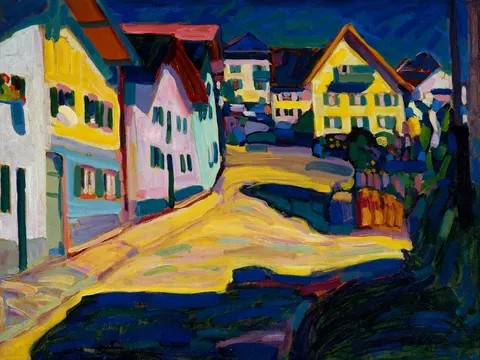

Murnau, Burggrabenstrasse 1, 1908
Wassily Kandinsky, 1908
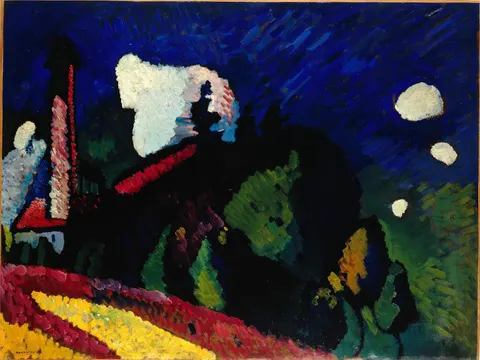

Murnau, Landscape with a Tower
Wassily Kandinsky, 1908
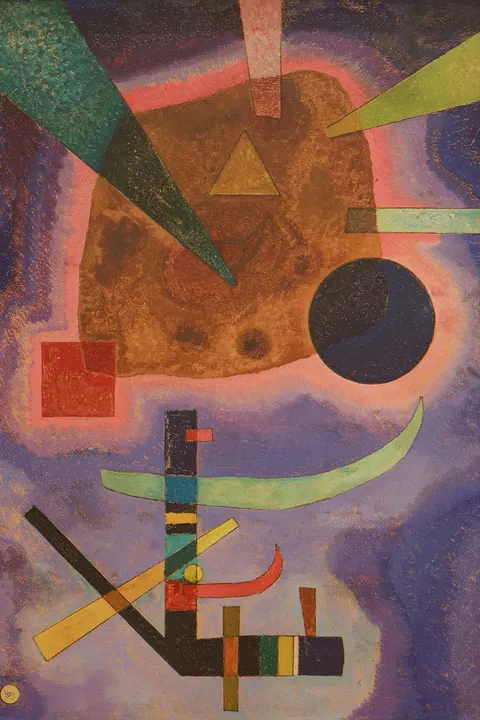

Three Elements
Wassily Kandinsky, 1925
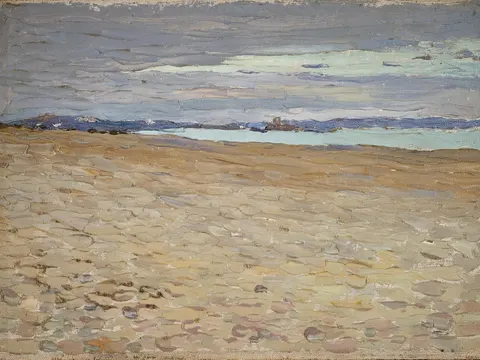

Tunis, Coastal Landscape I
Wassily Kandinsky, 1905
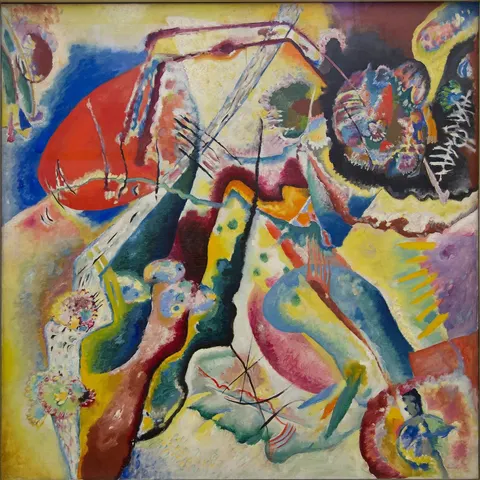

Painting with a Red Stain
Wassily Kandinsky, 1914
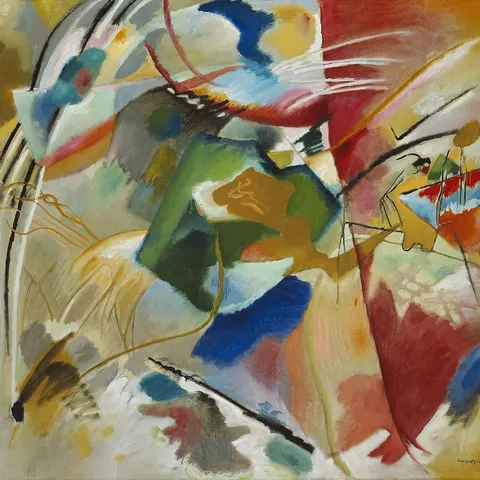

Painting with Green Center
Wassily Kandinsky, 1913
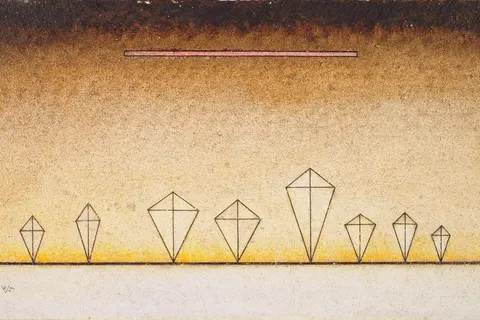

Eight Times
Wassily Kandinsky, 1929


Gentle Event
Wassily Kandinsky, 1928
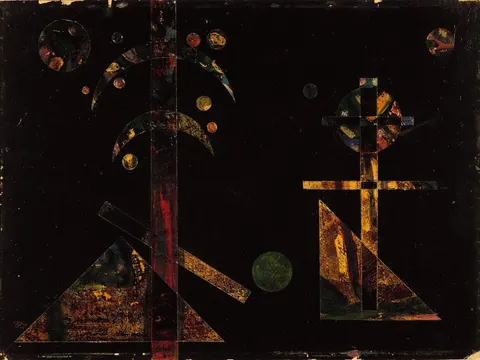

To Nina for Christmas
Wassily Kandinsky, 1926
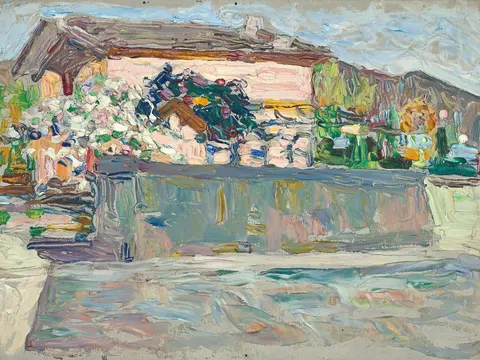

Spring, Vicinity of Augsburg
Wassily Kandinsky, 1902
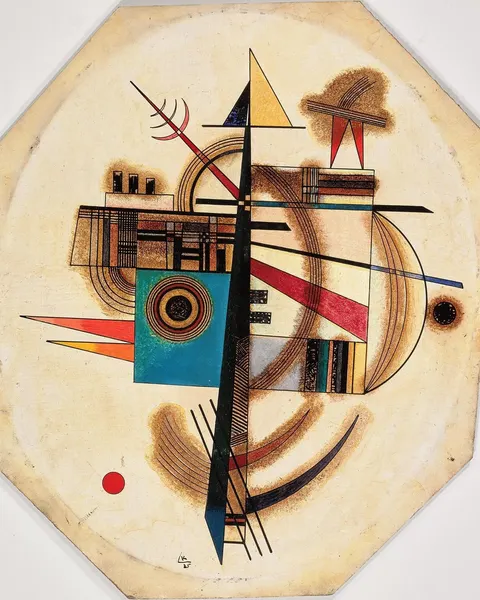

Oval #2
Wassily Kandinsky, 1925
About Wassily Kandinsky
Born 1866
1900
1920
Died 1944
He had been teaching law and economics when, in 1896, he gave it up to train as a painter in Munich. Two memories from Russia stayed with him. On a research trip to the Vologda region in 1889, houses and churches glowed with such colour that stepping inside felt like walking into a painting. And at a Moscow exhibition of Monet, he could not tell that one of the Haystacks showed a haystack, yet the picture fixed itself in his memory.
In Munich he was first the teacher, then the partner, of the painter Gabriele Münter. In 1909 she bought a house in the Bavarian town of Murnau, and in the 1930s she used its basement to hide his work and that of their Blue Rider friends from the Nazis; house searches never found it. His book On the Spiritual in Art argued that colour could stand on its own, apart from describing any object.
That book sorted paintings into three kinds: impressions start from something seen, while improvisations and compositions rise from the unconscious, the composition being the more formally worked out. So Improvisation 27 (Garden of Love II), a 1912 oil the Met holds from Alfred Stieglitz's collection, is by his own definition the spontaneous kind, while Composition VIII belongs to the ten Compositions he treated as his ultimate works. He even heard colours: yellow, he said, was middle C on a brassy trumpet.
The First World War sent him back to Moscow in 1914, and from 1922 he taught at the Bauhaus until the Nazis closed it in 1933. There geometry took over his teaching and his canvases, above all the circle, which he called the most peaceful shape and a figure for the human soul. He settled in France, became a French citizen in 1939 and died at Neuilly-sur-Seine on 13 December 1944.
Wassily Kandinsky is part of our Expressionism & Early Modernism collection.
Related artists
Questions about Wassily Kandinsky prints
- What are the Wassily Kandinsky prints made of?
- Every Wassily Kandinsky print is printed to order in the USA. Fine art prints use 340gsm cold press fine art paper, 100% cotton rag and acid-free, with archival inks. Canvases use 360gsm archival canvas, stretched over solid wood stretcher bars.
- What size Wassily Kandinsky print should I choose?
- It depends on the wall. As a rule of thumb, aim for artwork roughly two-thirds the width of the furniture it hangs above — check each artwork's page for a size guide against the original dimensions.
- Canvas, framed, or fine art print?
- Canvas and framed canvas suit statement walls and gift-giving, and arrive ready to hang. Fine art prints on cotton rag paper are a lower-cost way to try a piece before committing to a larger format.
- How long does delivery take?
- Every print is made to order and arrives within 8 business days, often sooner. If it arrives damaged or faulty, we replace or refund it within 90 days.