1775–1851 · British · Romanticism
J. M. W. Turner Art Prints
All his working life, Joseph Mallord William Turner (1775–1851) argued in paint that a landscape could carry as much meaning as a scene from history or myth. Storms, fog, sunlight and the sea were his real subjects, and his handling of light and colour later inspired Monet and Pissarro.
Shop J. M. W. Turner
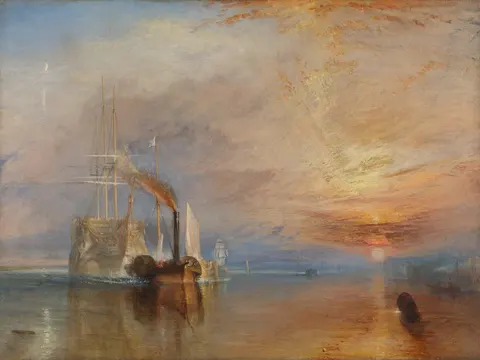

The Fighting Temeraire
J. M. W. Turner, 1839
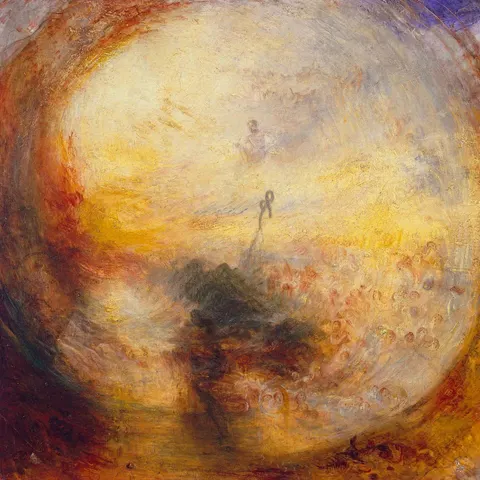

Light and Colour (Goethe's Theory) – The Morning after the Deluge – Moses Writing the Book of Genesis
J. M. W. Turner, 1843
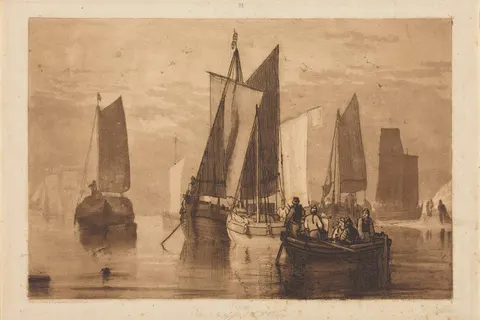

Calm
J. M. W. Turner, published 1812
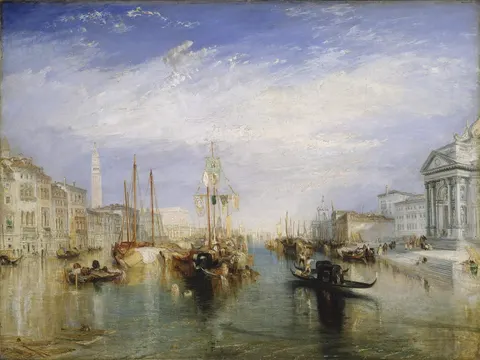

Venice, from the Porch of Madonna della Salute
J. M. W. Turner, 1830s
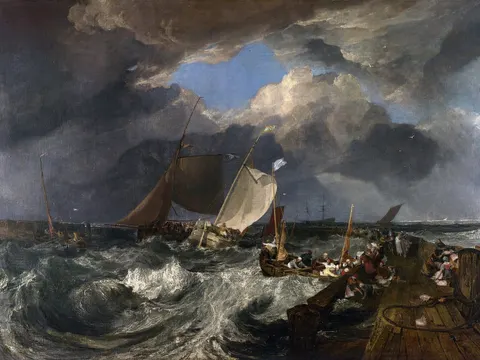

Calais Pier
J. M. W. Turner, 1803
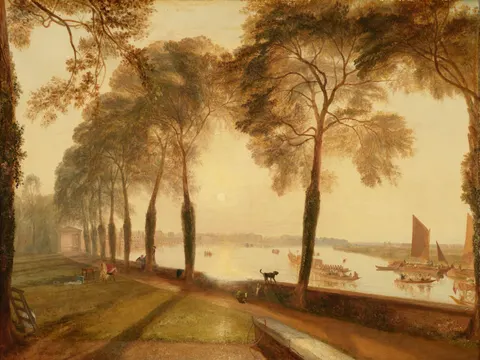

Mortlake Terrace
J. M. W. Turner, 1827
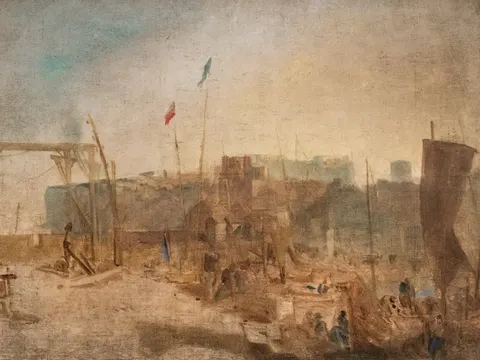

Margate
J. M. W. Turner, 1806–1807
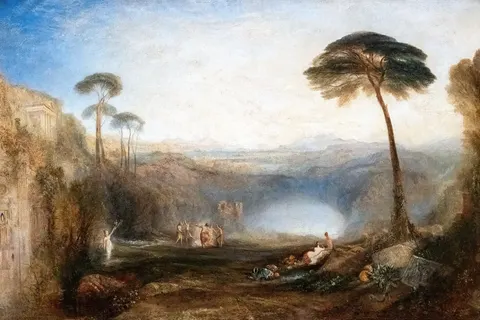

The Golden Bough
J. M. W. Turner, 1834
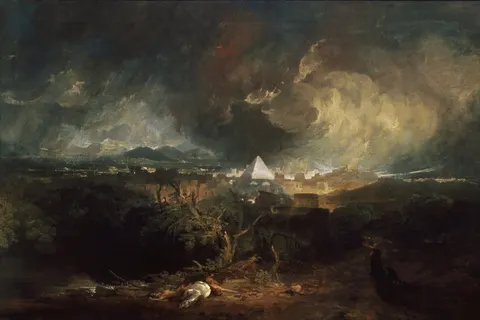

The Fifth Plague of Egypt
J. M. W. Turner, 1800
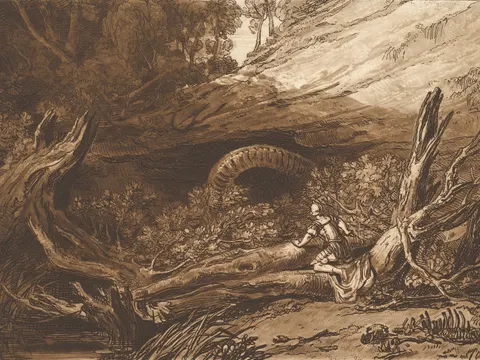

Jason
J. M. W. Turner, 1807
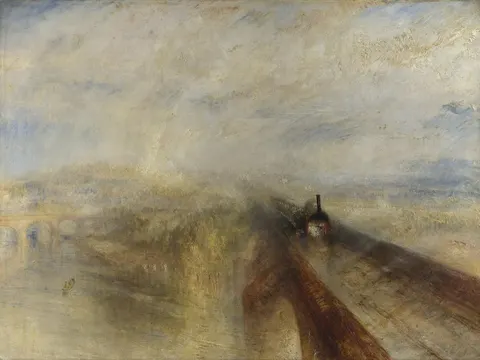

Rain, Steam and Speed – The Great Western Railway
J. M. W. Turner, 1843
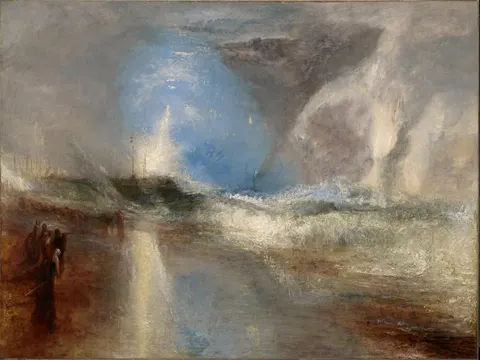

Rockets and Blue Lights (Close at Hand) to Warn Steamboats of Shoal
J. M. W. Turner, 1840
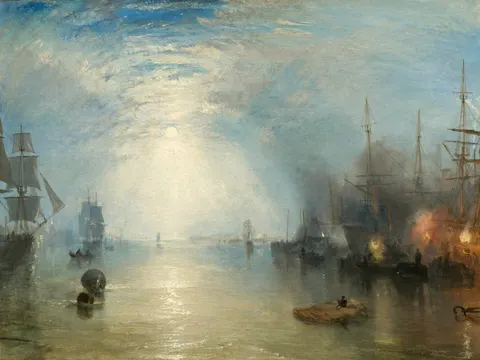

Keelmen Heaving in Coals by Moonlight
J. M. W. Turner, 1835
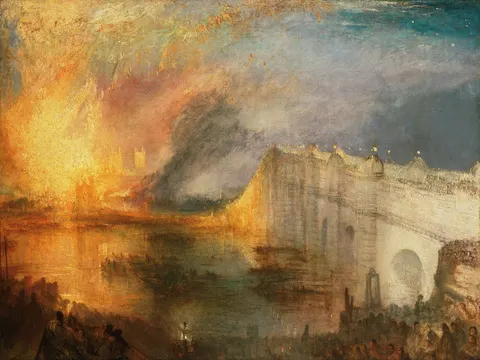

The Burning of the Houses of Lords and Commons
J. M. W. Turner, 1834
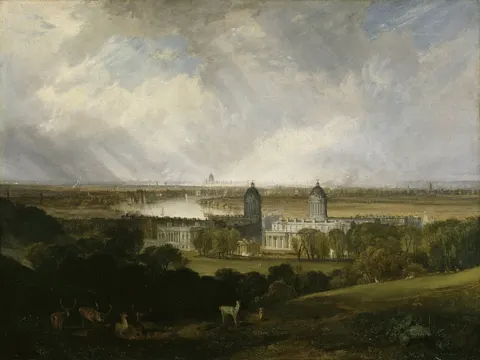

London from Greenwich Park
J. M. W. Turner, 1809
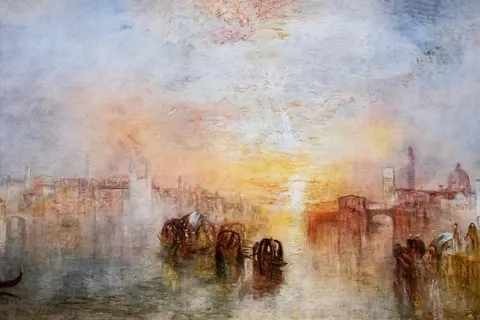

Going to the Ball (San Martino)
J. M. W. Turner, 1846
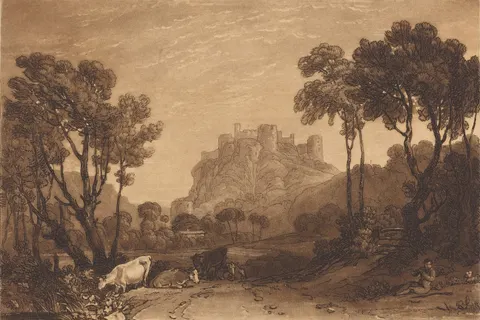

The Castle Above the Meadows
J. M. W. Turner, published 1808
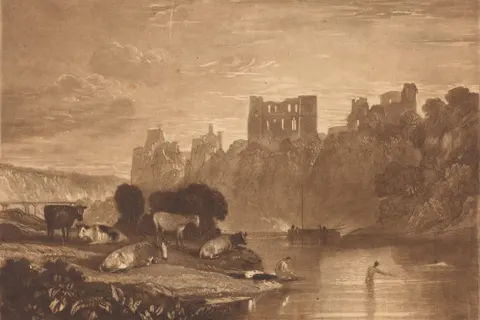

River Wye
J. M. W. Turner, published 1812
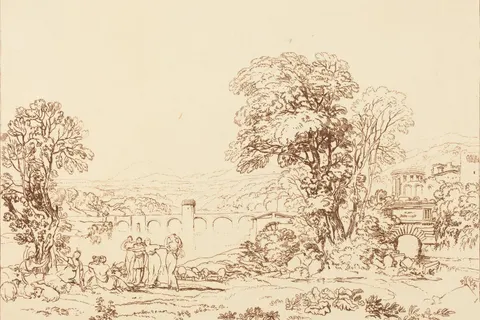

Apuleia in Search of Apuleius
J. M. W. Turner,
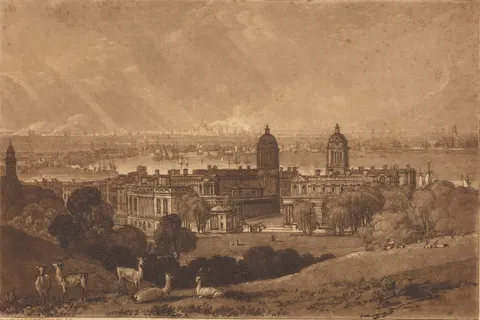

London from Greenwich
J. M. W. Turner, published 1811
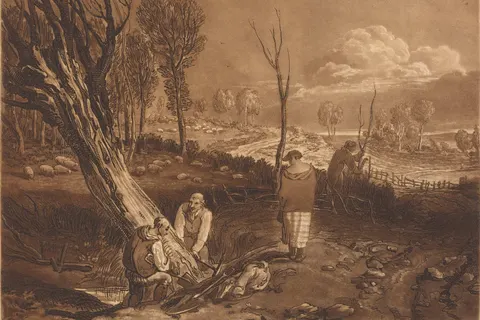

Hedging and Ditching
J. M. W. Turner, published 1812
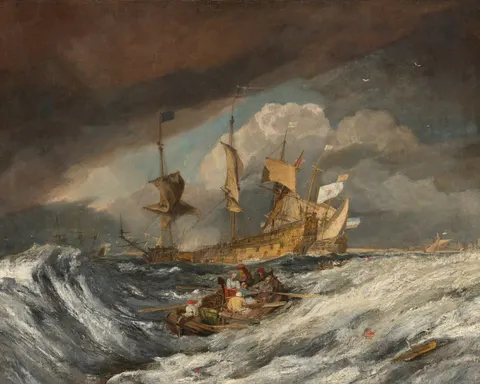

Boats Carrying Out Anchors to the Dutch Men of War
J. M. W. Turner, c. 1804
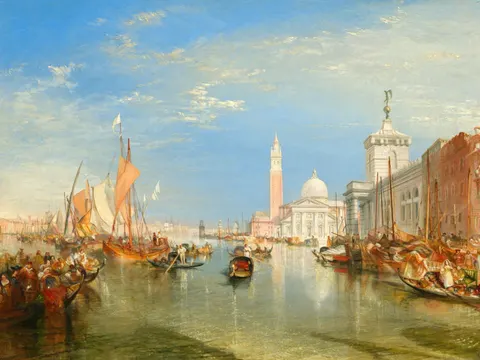

Venice: The Dogana and San Giorgio Maggiore
J. M. W. Turner, 1834
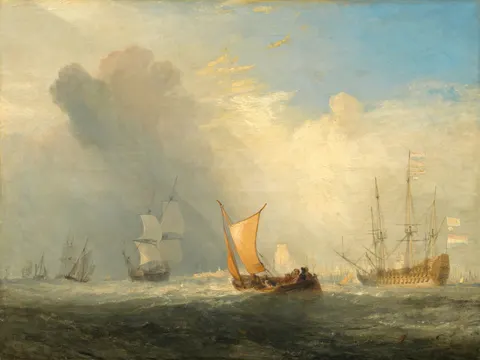

Rotterdam Ferry-Boat
J. M. W. Turner, 1833
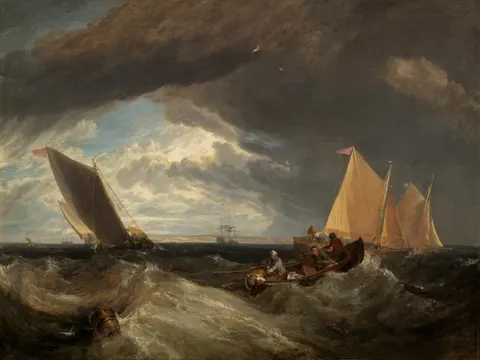

The Junction of the Thames and the Medway
J. M. W. Turner, 1807
About J. M. W. Turner
Born 1775
1800
1820
Died 1851
He was born in 1775 in Maiden Lane, Covent Garden, where his father ran a barbershop and showed the boy's drawings in the window. The Royal Academy Schools took him at 14, and at 27 he became a full Academician, one of the youngest ever, though his working-class roots and undisguised cockney accent caused friction with the Academy's aristocrats.
Early success came from imitating anyone's manner, from Rembrandt to Claude, well enough to command top prices. The Fifth Plague of Egypt, sold in 1799 for 150 guineas, reads more as a landscape than a Bible scene; despite its title it shows hail and fire, the seventh plague. Calais Pier came from a real crossing in 1802, when he nearly drowned getting ashore. He also made about 70 prints for his Liber Studiorum, a book of landscape types; the Jason plate of 1807 is etching and mezzotint.
The Thames, where he lived, fished and went boating, is his most repeated subject after the sea. In The Fighting Temeraire a paddle-wheel steam tug tows a Trafalgar warship up the river to be broken for scrap, and in Rain, Steam and Speed a train hurtles over a bridge, barely more than a blur. Venice drew him back too, and Venice, from the Porch of Madonna della Salute shows an imagined view rather than a real one. Alongside the drama he kept painting gentler, pastoral scenes, among them The Golden Bough (1834), taken from Virgil's Aeneid.
Critics mocked the late work as painted with "cream, or chocolate, yolk of egg, or currant jelly". One honest note for anyone looking closely: he chose pigments that looked good fresh, such as carmine, and many of his colours have faded since. He died in Chelsea in 1851 and left the nation about 100 finished oils, 200 unfinished canvases and over 19,000 sketches and watercolours.
J. M. W. Turner is part of our Romanticism collection.
Related artists
Questions about J. M. W. Turner prints
- What are the J. M. W. Turner prints made of?
- Every J. M. W. Turner print is printed to order in the USA. Fine art prints use 340gsm cold press fine art paper, 100% cotton rag and acid-free, with archival inks. Canvases use 360gsm archival canvas, stretched over solid wood stretcher bars.
- What size J. M. W. Turner print should I choose?
- It depends on the wall. As a rule of thumb, aim for artwork roughly two-thirds the width of the furniture it hangs above — check each artwork's page for a size guide against the original dimensions.
- Canvas, framed, or fine art print?
- Canvas and framed canvas suit statement walls and gift-giving, and arrive ready to hang. Fine art prints on cotton rag paper are a lower-cost way to try a piece before committing to a larger format.
- How long does delivery take?
- Every print is made to order and arrives within 8 business days, often sooner. If it arrives damaged or faulty, we replace or refund it within 90 days.