Death and Life
Gustav Klimt, 1910–1915 · Art Nouveau Posters
Image 1 of 3: Stretched canvas

Type
Size
Frame finish
Original is 79" × 71" — our 12" × 12" is about 15% of actual size.
Free US shipping & returns · Delivered within 8 days
Our promise to you
90-day happiness guarantee
If anything isn’t right, or you just don’t love it, tell us within 90 days and we’ll replace it or refund you.
Free, fast US shipping
Artworks are printed & shipped from the US within 3 business days; they usually arrive in another 5 days.
Delivery guarantee
If your print arrives damaged or is lost in transit, we'll replace it free or refund you.
Made to last
340gsm cotton rag paper or archival canvas, with archival inks rated to resist fading for over 100 years. We check every crop so the art sits right.
A real person, within 24 hours
Questions before or after you order? Email us and we’ll get back to you within a day.
About this work
Death and Life sets a grinning skeleton, wrapped in a cloak of crosses, against a tightly packed mass of sleeping figures — infant, lovers, mother, and elder — rendered in warm, patterned color. The composition stages Klimt's recurring theme of the life cycle as a single, crowded allegorical tableau.
Klimt began the painting in 1910 and reworked it repeatedly, around 1911 and again in 1915–16, changing the once-gilded background to a somber grey and adding mosaic ornament to the figures. He considered it one of his most important works, and it won first prize at the 1911 International Art Exhibition in Rome.
Gustav Klimt
Death and Life, 1910–1915
Oil on canvas
- Original size
- 200.6 × 180.8cm
- 79" × 71"
Choose how it’s printed
Every piece is made to order and printed within 3 business days. Printed in the USA, with free shipping and our 90-day happiness guarantee.
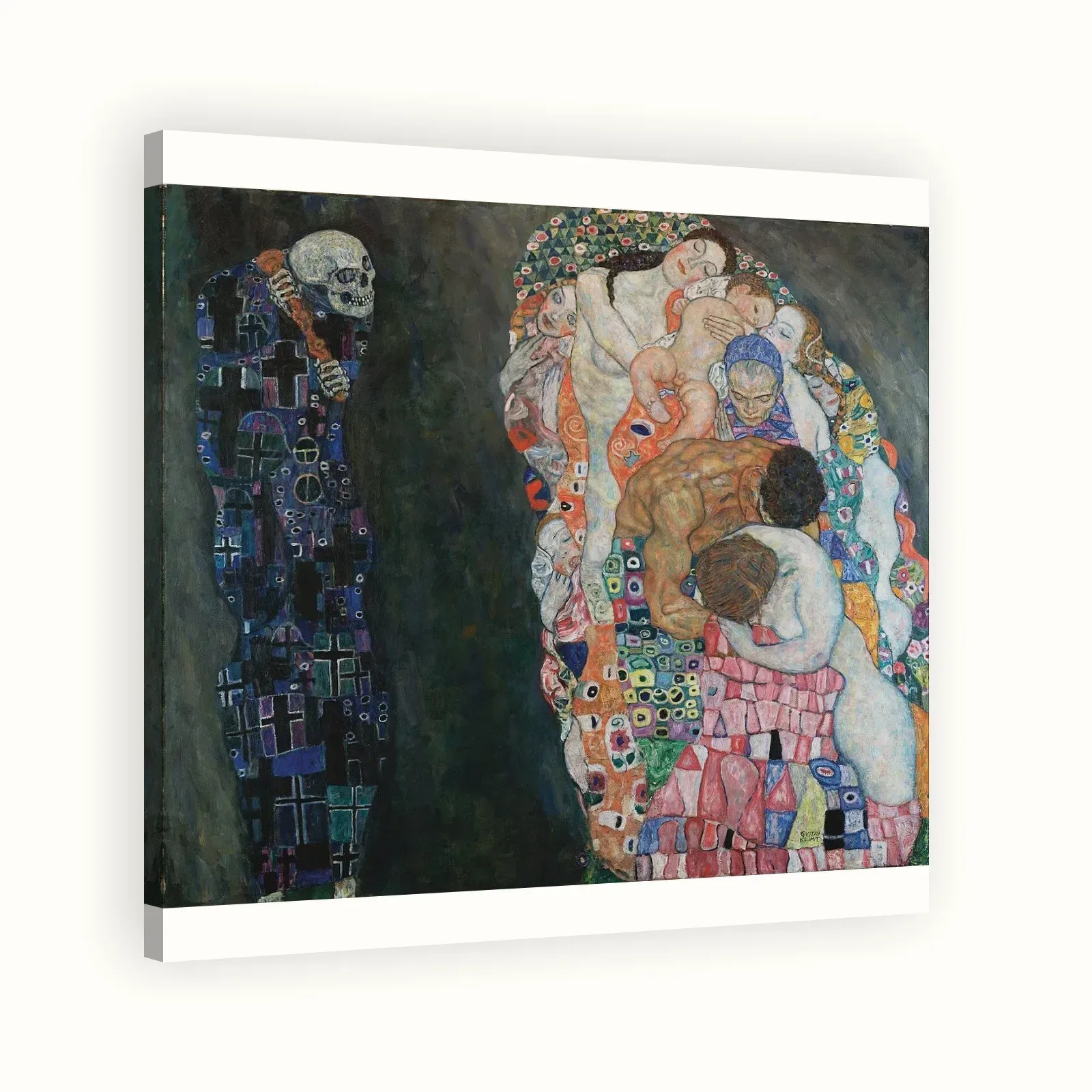
Stretched canvas
Archival canvas stretched over 1.5″ solid wood stretcher bars. At gallery depth the canvas stands off the wall on its own, so it looks finished with no frame at all.
The image wraps around the edges, so the painting carries on around the sides, and it arrives with hanging wire installed, ready to go straight on the wall.
- Canvas
- Archival canvas
- Depth
- 1.5″ solid wood stretcher bars
- Inks
- Archival inks, rated to resist fading for over 100 years
- Edges
- Image wrapped around the sides
- Arrives
- Boxed, with hanging wire installed
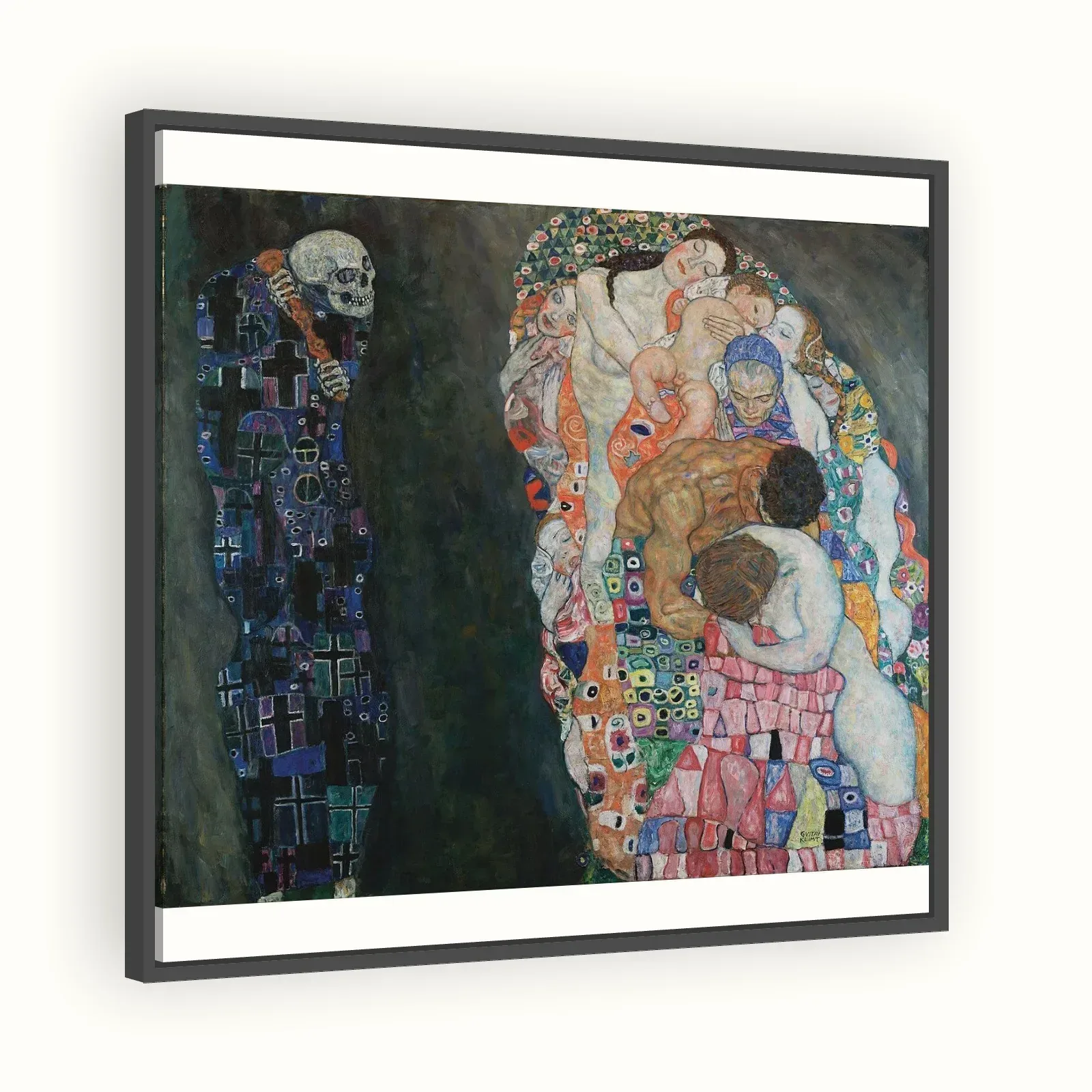
Framed canvas
The same archival canvas, set in a floating frame. The frame sits around the canvas edge with a small gap, so the canvas appears to float inside it.
Choose black, white, gold or silver. There’s no glass, so there’s nothing to catch reflections or crack in transit.
- Frame
- Solid wood floating frame in black, white, gold or silver, 0.55″ face, 1.88″ deep
- Canvas
- Archival canvas on 1.5″ solid wood stretcher bars
- Glazing
- None, so there’s no glass to catch reflections
- Arrives
- Boxed, with hanging wire installed
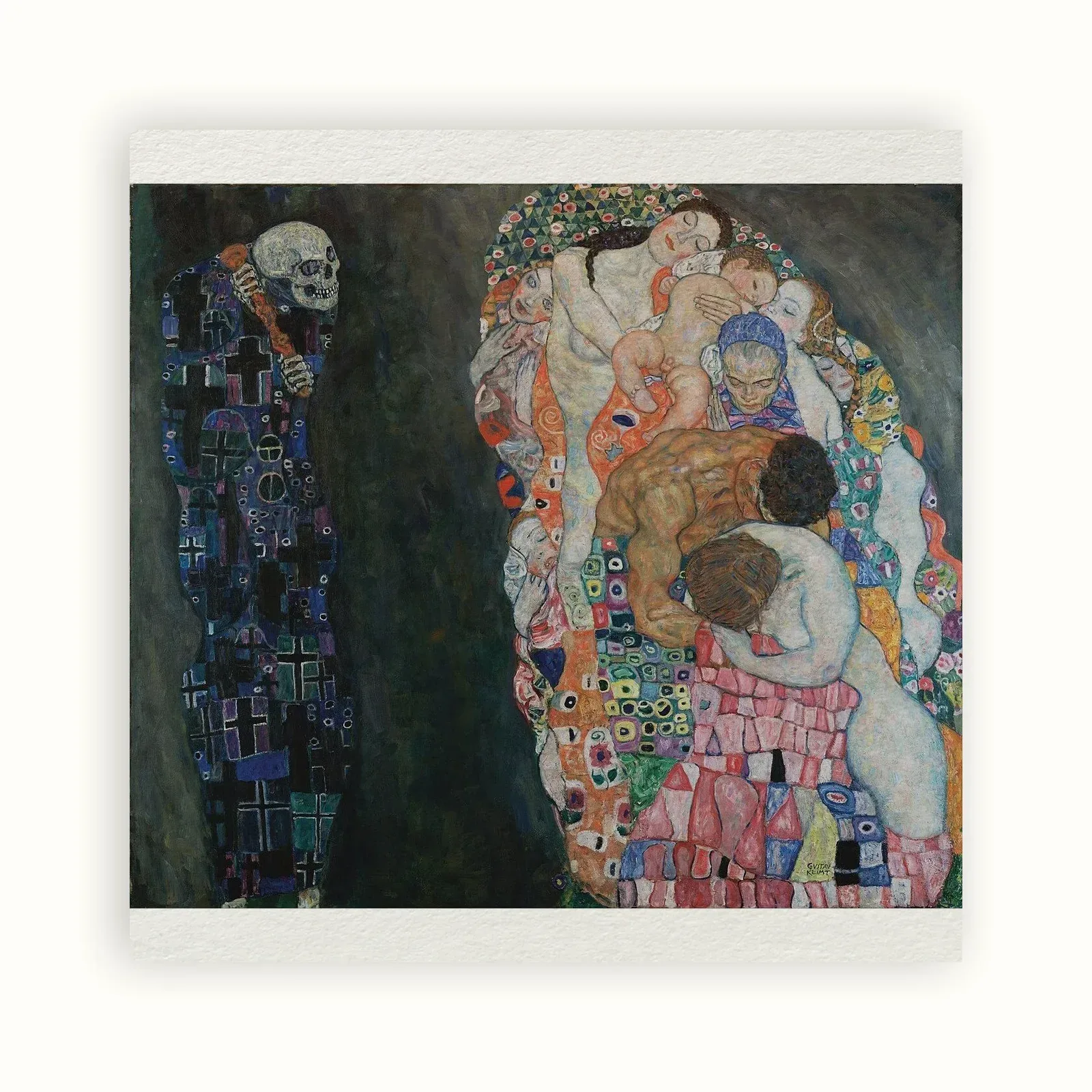
Fine art print
Printed on 340gsm cold press fine art paper made from 100% cotton rag. Cold press paper is pressed between cold rollers, which leaves a subtle natural texture, like watercolour paper, so the painting reads as paint rather than a glossy photo.
Cotton rag is the traditional base for archival fine art paper. It’s acid-free, so it won’t yellow or turn brittle, and the matte surface means no glare under lamps or daylight.
- Paper
- 340gsm, 100% cotton rag, acid-free
- Surface
- Cold press texture, matte finish
- Printing
- Giclée, with archival pigment inks
- Inks
- Archival inks, rated to resist fading for over 100 years
- Arrives
- Flat in a card mailer when small, rolled in a tube when larger, ready for your own frame
How big is the original Death and Life?
The original is 200.6 cm wide and 180.8 cm high (79" × 71"). That is wall-dominating: wider than most adults are tall. Even our largest print, 40"×40", is about half as wide as the original. Below, it is shown at true scale beside an armchair.


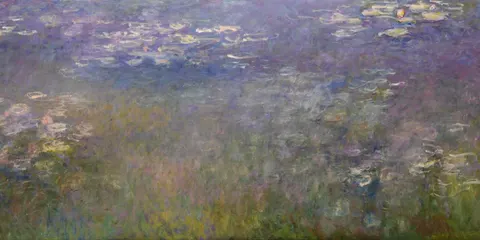 Best Seller
Water Lilies
Claude Monet, c. 1915–1926
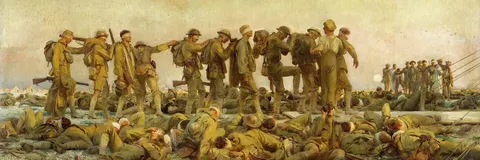
Gassed
John Singer Sargent, 1919
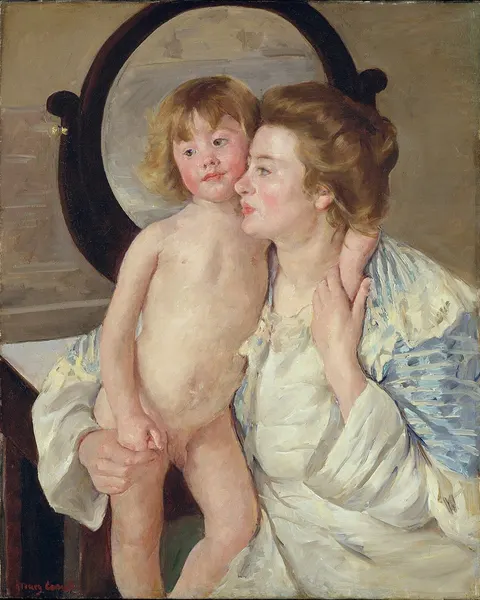 Popular
Mother and Child (The Oval Mirror)
Mary Cassatt, c. 1899

Where Do We Come From? What Are We? Where Are We Going?
Paul Gauguin, 1897–1898

Composition VIII
Wassily Kandinsky, 1923
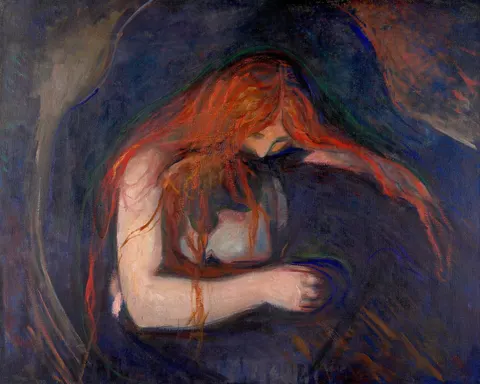
Vampire
Edvard Munch, 1895

Simplon Pass
John Singer Sargent, 1911
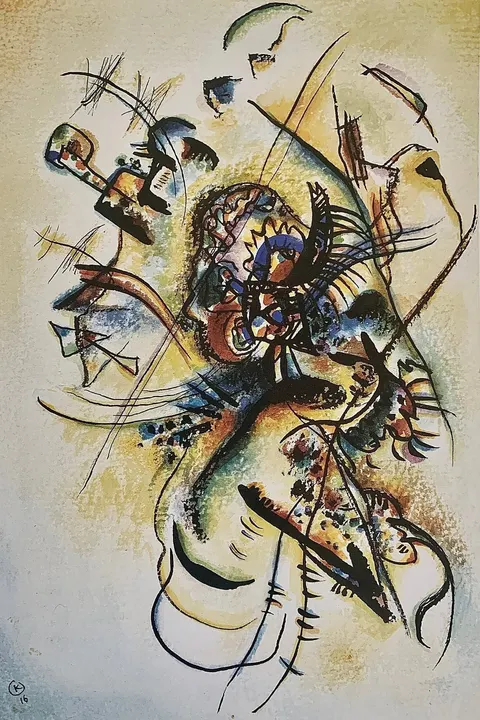 Popular
Composition J
Wassily Kandinsky, 1916
Frequently asked questions
All questions →Will the colours match my screen?
Close, but not identical — screens emit light and prints reflect it, so tones read a little warmer on paper. We work from the museum's own high-resolution image wherever possible. If the colours aren't what you hoped for, our 90-day happiness guarantee covers you.
How big will it actually look?
Every size is listed in inches. Prints come in six standard shapes, so most paintings are cropped slightly to the closest one, and we never stretch a painting or pad it with white bars. Each artwork page shows the print against the original dimensions.
What if it arrives damaged?
If your print arrives damaged or is lost in transit, we'll replace it free or refund you. Email us your order number and a photo within 90 days of delivery.
How soon will it arrive?
Every print is made to order. It's printed within 3 business days and delivered within 5 more, so it arrives within 8 business days. Tracking is included.
What are the prints made of?
Fine art prints use 340gsm cold press fine art paper, 100% cotton rag and acid-free, with archival inks. Cold press paper is pressed between cold rollers, which leaves a subtle natural texture like watercolour paper, and its matte surface has no glare. Canvases use 360gsm archival canvas, stretched over solid wood stretcher bars.
Canvas, framed or fine art print?
Canvas is stretched over solid wood stretcher bars and ready to hang. Framed prints are canvases set in a floating frame, with no glass, and also arrive ready to hang. Fine art prints are printed on cotton rag paper, ship flat or rolled in a tube depending on size, ready for your own frame, and are the lower-cost way to start.