Claude Monet's Water Lilies
1899–1918 · 6 works available as prints
Monet made the subject before he painted it. In 1893 he bought a plot beside his house in Giverny, with a small pond he meant to turn into a water garden "both for the pleasure of the eye and for the purpose of having subjects to paint". He filled the enlarged pond with hybrid water lilies and built a humpback bridge at one end, inspired by examples seen in Japanese prints. The water garden became the subject of some 250 paintings, and many of the works were painted while Monet suffered from cataracts.
The bridge came first. Monet painted three views of it in 1895, returned to it in 1899, and in December 1900 exhibited 12 paintings at Durand-Ruel's gallery in Paris, all more or less symmetrical views of the bridge. The Art Institute of Chicago places its 1906 canvas in a group made between 1903 and 1908; its nearly square format moves away from land, sky and water to focus solely on the water's surface. The National Gallery calls the culmination the Grandes Décorations: 22 enormous canvases, each over two metres high, donated to the French state and now in two oval rooms at the Musée de l'Orangerie.
Shop Water Lilies
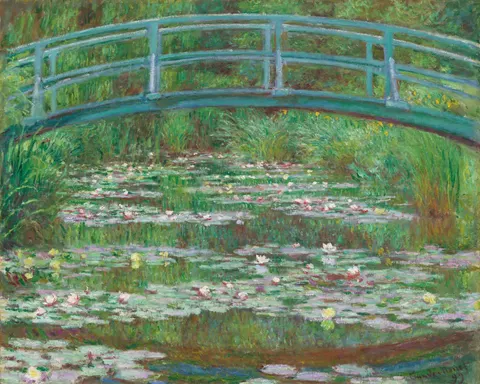

The Japanese Footbridge
Claude Monet, 1899
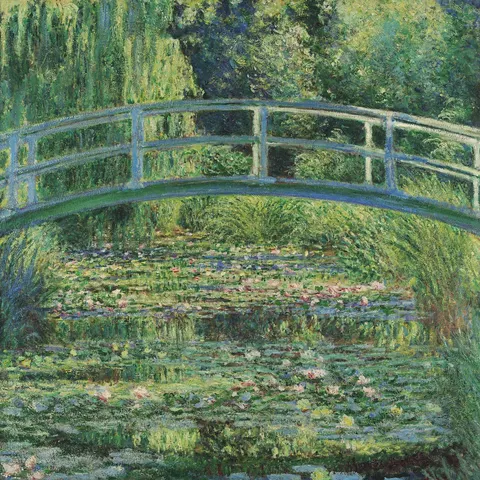

Water Lilies and Japanese Bridge
Claude Monet, 1899
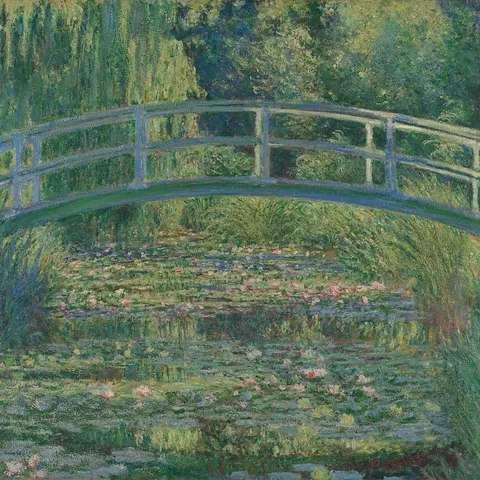

The Water Lily Pond (Le Bassin aux nymphéas)
Claude Monet, 1899
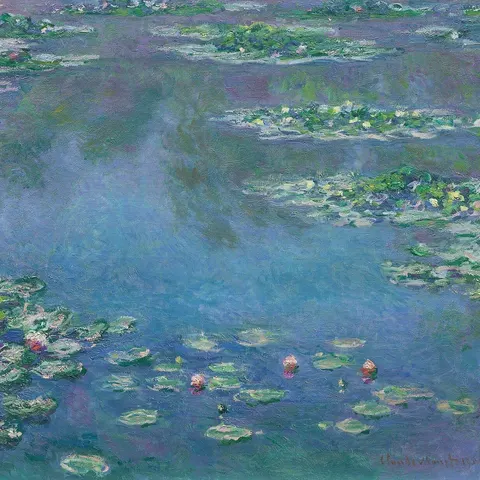

Water Lilies (Nymphéas), 1906
Claude Monet, 1906
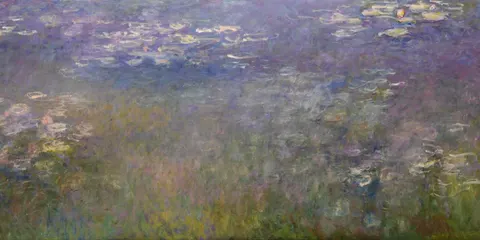

Water Lilies
Claude Monet, c. 1915–1926
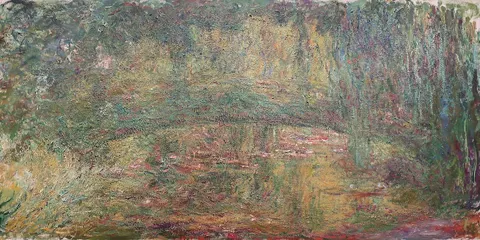

The Japanese Bridge
Claude Monet, 1918